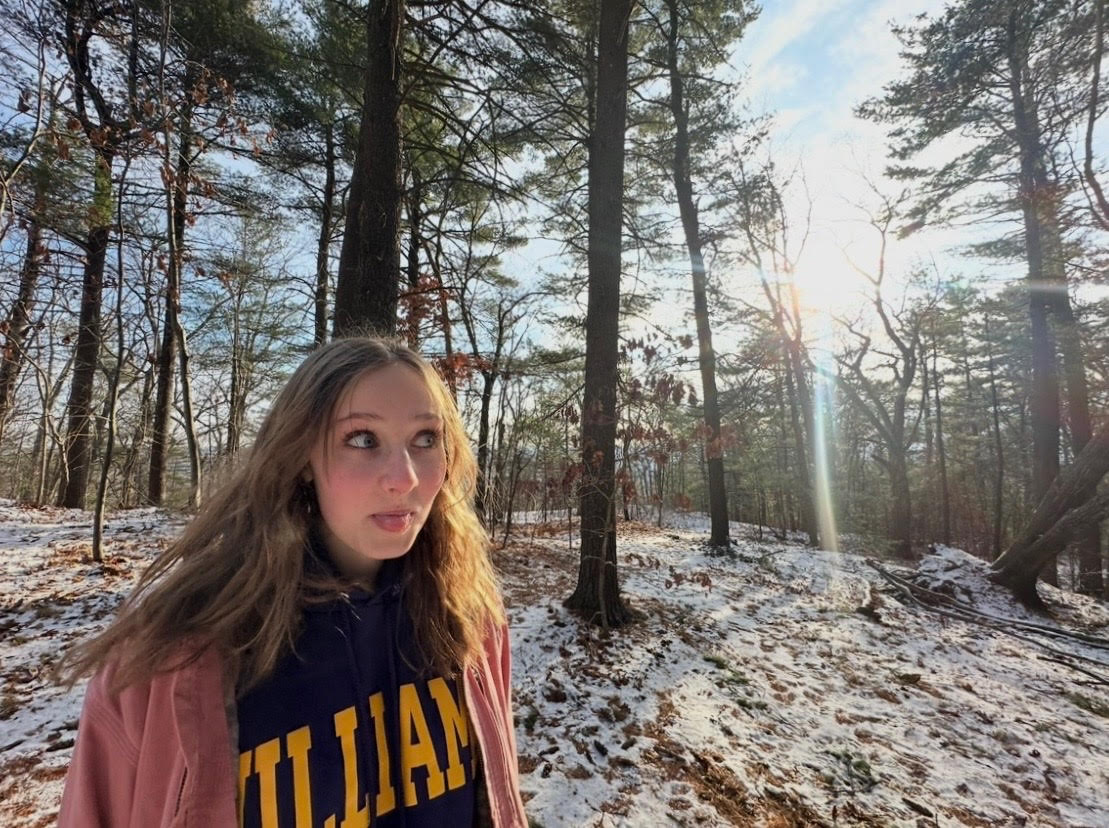

Each week, the Record (using a script in R) randomly selects a student at the College for our One in Two Thousand feature, excluding current Record board members. This week, Grace Newman ’26 discussed her love of theater, her senior thesis, and semester in Rome. This interview has been edited for length and clarity.
Haley Zimmerman (HZ): I know it’s been a big few weeks for you, as you just finished directing a play. Can you tell me about it?
Grace Newman (GN): The show is called Deathtrap. It closed last week. It was a lot of fun. It’s a dark comedy thriller from the ’70s about a playwright who used to be very successful and now he’s kind of washed up. He gets a play in the mail and the play is really good and he decides he’s going to kill the guy who wrote it. It is very twisty and turny. It was so much fun. The cast found a lot of things in the characters that I didn’t initially see. It was crazy because I thought that I was never going to get to do this show. Originally, I’d been trying to do it in the fall, and then the rights got denied, which the Record wrote an article about. It was such a relief to actually get to do it. It was very, very fun. And it was a good last show for me, I think.
HZ: How did you learn to direct?
GN: I’ve done theatre since I was maybe five. I started as an actor because they don’t really let you do anything else as a child, but I realized once I got older that acting was not the part of theatre that I enjoyed at all. I just really liked being in the space, and how everyone shared their ideas. My freshman year, my first Cap & Bells show was called She Kills Monsters, which was directed by a senior named Vanessa [Silva ’23]. I learned a lot from her in her process and how she interacted with the actors and what kind of exercises she did to draw certain things out of people. My junior year, I assistant-directed Much Ado about Nothing. I still think about it constantly. That was one of my favorite theatre experiences that I’ve ever had. I also learned so much from the director, Erica [Terpening-Romeo, visiting assistant professor of theatre.]
HZ: As a new director, was it scary to be in charge for the first time? How did you deal with that?
GN: I think it really is just trying to do it. You don’t know unless you just baby-bird yourself out of the nest. And it is very scary. There were a lot of things from Deathtrap that I realized pretty early on weren’t working and that I felt like I had to change about my own directing style. So a big part of it for me was telling myself that even if I had started in a certain direction, it was okay to pivot if that’s what was best for the people in the project.
HZ: How many productions have you been a part of at the College?
GN: Oh, goodness. In some capacity, I’ve been in 12. Freshman year, I was crazy — I did six. That was a bad idea. When I came to college, my number-one thought was, “I’m going to do less theatre, and I’m going to find out more about who I am without theatre.” And then I got into my first production maybe two weeks in. I realized that I just love theatre so much — there wasn’t anything else here that excited me as much. Going abroad was important for me because I went to a program that didn’t have any extracurriculars, so that was a really good way for me to find out who I was without theatre. But maybe two months in, I started going crazy and all I would do was listen to Broadway soundtracks because I felt so lost without it.
HZ: Where did you study abroad?
GN: I was in Rome, at this program called the Intercollegiate Center for Classical Studies, which is just for classics majors. There were about 30 of us living in this old convent. There were four professors. Most of our classes were just focused on experiential learning, and so we took a lot of field trips. That was a really wonderful experience because in the classics major, it’s so hard to envision things, even if we’ve been studying them for so long. So being there and being on the ground and seeing not just what these places looked like, but where they were in relation to each other, was really wonderful.
HZ: I know you’re writing a comparative literature thesis. Can you tell me about it?
GN: My thesis is about an Italian horror movie called Suspiria, and [Virgil’s] the Aeneid. I’m looking at those two through the lens of feminist horror and psychoanalysis. Because they’re focused on these horrible, gross things that are traditionally associated with women, when characters get put into these spaces, it actually allows female characters to have more agency, because the landscape is more traditionally geared towards them.
HZ: What’s your Goodrich order, and what do you think it says about you?
GN: I’m not on the meal plan anymore, but when I was on the meal plan, it was a cinnamon raisin bagel with plain cream cheese and a hot chocolate. And what that says about me is that I’m not enough of an adult to handle the taste of coffee yet.
HZ: Finally, can you tell me about one of your favorite memories from your time at the College?
GN: My freshman year, I stage managed a production of Pippin. My friends and I still talk about “Pippin Spring” because that production was just so joyful. I remember toward the end when we were getting into tech, every day before we went into rehearsal, we would all be sitting outside on Chapin steps for like two hours, just being in the sun and talking and laughing. I just remember that amorphous concept of “Pippin Spring” being a time when I was really, really happy.