
“I don’t have a typical day,” Michael Govan ’85 said in an interview with the Record. “It starts early, and it almost always ends up in going out. I go out six nights a week.”
Govan is the director of the Los Angeles County Museum of Art (LACMA), where he is responsible for overseeing programming and operations for the largest art museum in the western United States. But long before he started this role, Govan was an art history and studio art major at the College. In an interview with the Record, Govan discussed the columns in the Williams College Museum of Art’s (WCMA) Lawrence Hall, the importance of museum architecture, and his time as editor-in-chief of the Record.
Already a prominent figure in the art world, Govan’s name has been particularly ubiquitous as of late, having recently overseen the development of LACMA’s newest building. The David Geffen Galleries, a $720 million dollar addition to the museum’s infrastructure and a project that Govan started developing almost as soon as he took over as director of LACMA in 2006, have garnered significant attention. Now the talk of art-town, Govan got his start working at WCMA.
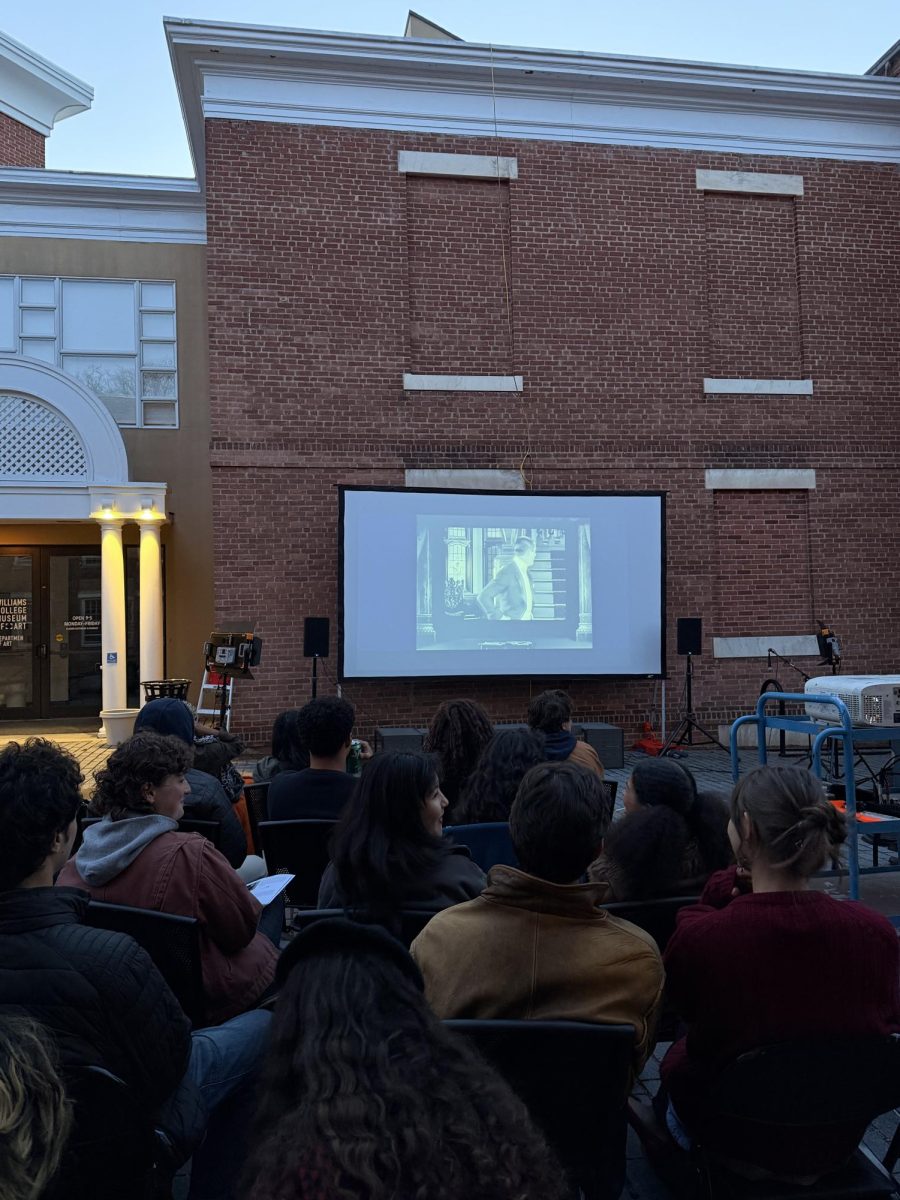
As a student at the College in the mid-80s, Govan worked at WCMA during its expansion, a project designed by postmodern architect Charles Moore. After its completion, Govan assisted with the installation of a combination of ancient and contemporary pieces into the newly renovated Lawrence Hall. He described the undertaking as a prototype for his work developing the David Geffen Galleries.
The small, eclectic WCMA that Govan helped transform is marked by its fusion of historic and modern architecture, most recognized for Moore’s infamous “ironic columns,” a playful subversion of ionic columns found in ancient Greek architecture. This project changed Govan’s understanding of what a museum space could convey. “I remember walking through those [columns] and always marveling at the sense of irony, humor, but also this idea that architecture always has meaning,” he said. “It means something. It’s not just a container.”
Govan’s appreciation of museum architecture continued to grow during his time working with several high-profile architects in the early stages of his career.
In the late 80s and early 90s, Govan’s work with Frank Gehry on developing and opening the Guggenheim Museum Bilbao in Spain taught him how architecture could impact a city. “[It was] an example of how civic scale architecture could impact the lives of people in a city or a region, not just what’s inside,” he said. “It really changed the whole city.”
In the early 90s, he worked with Pritzker Prize-winning architect Zaha Hadid at the Solomon R. Guggenheim Museum. “We commissioned her to design the exhibition of the Russian avant-garde in the Guggenheim,” he said. “She taught me a lot about how extreme and thoughtful architecture can be.”
When helping found MASS MoCA in North Adams in the 80s and 90s and Dia Beacon in New York City in 2003, Govan saw firsthand how museums can have a significant economic impact on nearby communities. He carried this philosophy to his work at LACMA.
“I understood that museums have a civic impact way beyond the art that’s inside,” he said. “In LACMA, for example, the whole idea is that we live in one of the most diverse cities on Earth. The idea is [that it’s] the museum of everything, of all things. We have surfboards and cars and ancient sculptures and contemporary art. It’s a mirror of the diversity of the metropolis.”
Govan often refers to LACMA as the living room of Los Angeles — everyone has a reason to be there. The building itself stretches over Wilshire Boulevard, a road that spans much of the city, and the galleries are surrounded by an exterior glass wall.
According to Govan, these architectural features integrate the building into the city around it. “[The museum] embraces the community,” he said. “It actually takes its shape from all the things around it… Los Angeles is very present inside the building. Whenever you’re looking at art from ancient Egypt, you’re also looking at Los Angeles of today, and you can look inside from outside. So the transparency, very intentionally, makes everything part of the metropolis. That is what I think architecture can do on a very large scale, civic level, if you’re thoughtful about it.”
At the College, one of his favorite professors was Professor of Art History and Studio Art Emeritus Ed Epping. “He had a winter study [class] in life drawing and watercolor,” Govan said. “I remember he made us make 100 watercolors of the same subject… I had too many good teachers, but Ed Epping was somebody who had a huge impact.”
Govan also reminisced on his time as editor-in-chief at the Record. “Journalism and making something and getting feedback is an incredible experience for life,” he said. “I can’t recommend that experience enough.”
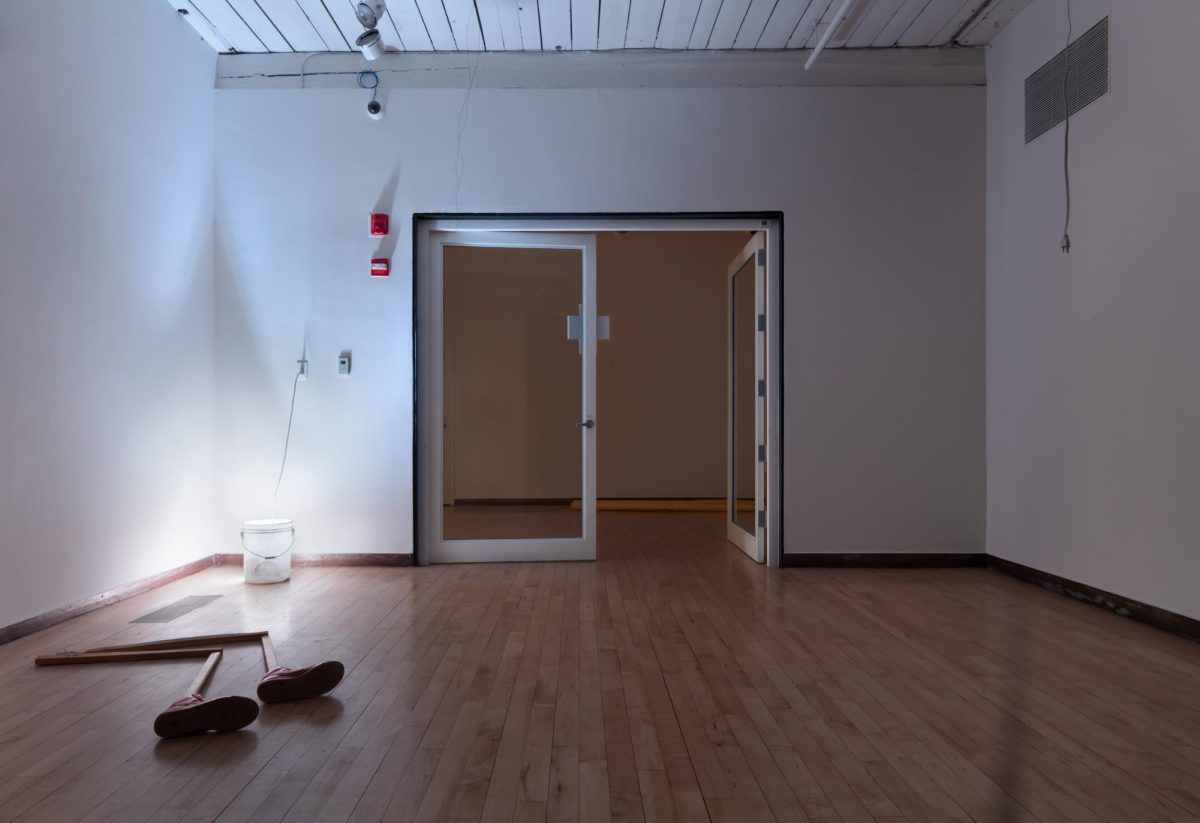
In November 1983, Govan wrote a piece for the Record after an outdoor sculpture on campus was inadvertently bulldozed to make space for a new storage building. The sculpture, by contemporary artist Alice Aycock, called “Williams College Project,” was a “four-foot wide by six-foot long, two-foot high concrete block chamber covered with wood planks and dirt,” according to the article. When he was informed of the mistake, the then-director of facilities management sent a memo to the art department stating that “there was no way that any layman, professor other than art (possibly), or any other rational person would have known that the dirt mound … was a ‘valuable’ piece of sculpture.” According to the article, Govan reached out to Aycock herself, who replied that she was “in shock,” despite understanding that, without a plaque, it would be hard to know that it was an art piece.
While speaking to the Record, Govan highlighted that he admired Aycock’s work and remembered calling her to tell her about the demolition. The piece itself received national attention from NBC, The New York Times, and various other newspapers, television and radio stations.
“It made the evening news not because it was an important artwork, but because it looked like a mound of earth, and so ‘regular people’ couldn’t blame anyone for bulldozing it,” Govan said. “It was a very meaningful and beautiful sculpture. But of course, as things go into the popular press like a game of telephone, they get distorted. And then the headline of why it made national news was, ‘Can you believe that there’s an uproar over bulldozing a mound of earth? Can you believe a mound of earth would be considered a sculpture?’”
Since then, Govan has continued his efforts to preserve land around several public artworks, most notably Walter De Maria’s “The Lightning Field” in New Mexico and Michael Heizer’s “City” in Nevada. Throughout his preservation work, lessons from the destruction of “Williams College Project” remained central.
“I learned many things from [the bulldozing incident], including how to set up public art with care and to make sure it’s cared for and known about and not hidden,” he said. “Institutions need to take care of things beyond their walls.”
Govan advised students at the College interested in pursuing a career in art museums to leave their dorms and walk to WCMA. “The idea that [the College] has an operating art museum, on the scale it does, is a huge opportunity,” he said. “You don’t have to go far. You have three world-class art museums right within bicycling distance.”