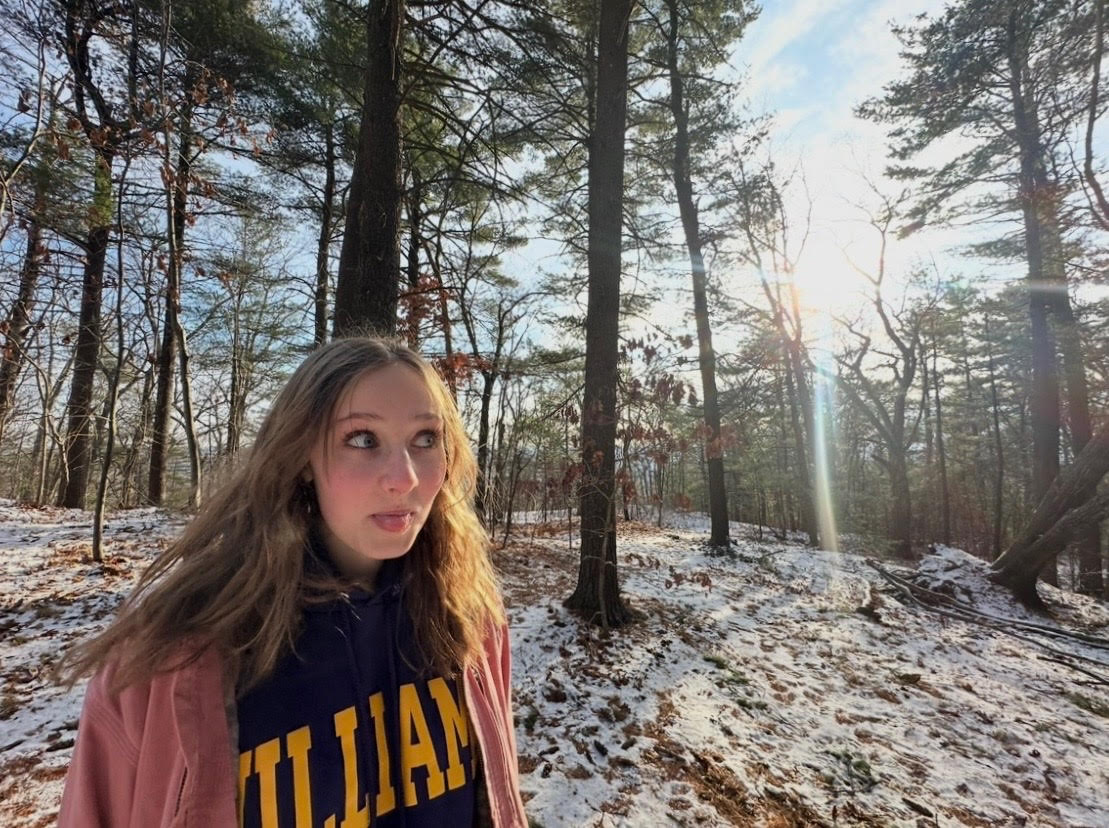

Each week, the Record (using a script in R) randomly selects a student at the College for our One in Two Thousand feature, excluding current Record board members. This week, Isabella Penna-Ward ’27 discussed her extensive work with local agricultural nonprofits, her love of studio art, and her figure skating aspirations. This interview has been edited for length and clarity.
Dihan Pagalilauan (DP): I know you have lots of experience working at the intersection of agriculture and community, particularly here in the Berkshires. Tell me more about what sparked that interest.
Isabella Penna-Ward (IP): I grew up in the Pittsfield area with a home garden, which made me interested in where food came from. But it wasn’t until my sophomore year of high school that I first experienced working on farms and getting to know local farmers, which had a big impact on me. With the Roots Rising Youth Development program, I was working with a group of peers from my high school and getting to know people in the community, but also taking cooking classes and financial literacy workshops — just getting my hands dirty. That definitely set me on my current path.
DP: As someone from the area, why do you think we need to pay more attention to the environment and how it intersects with our community?
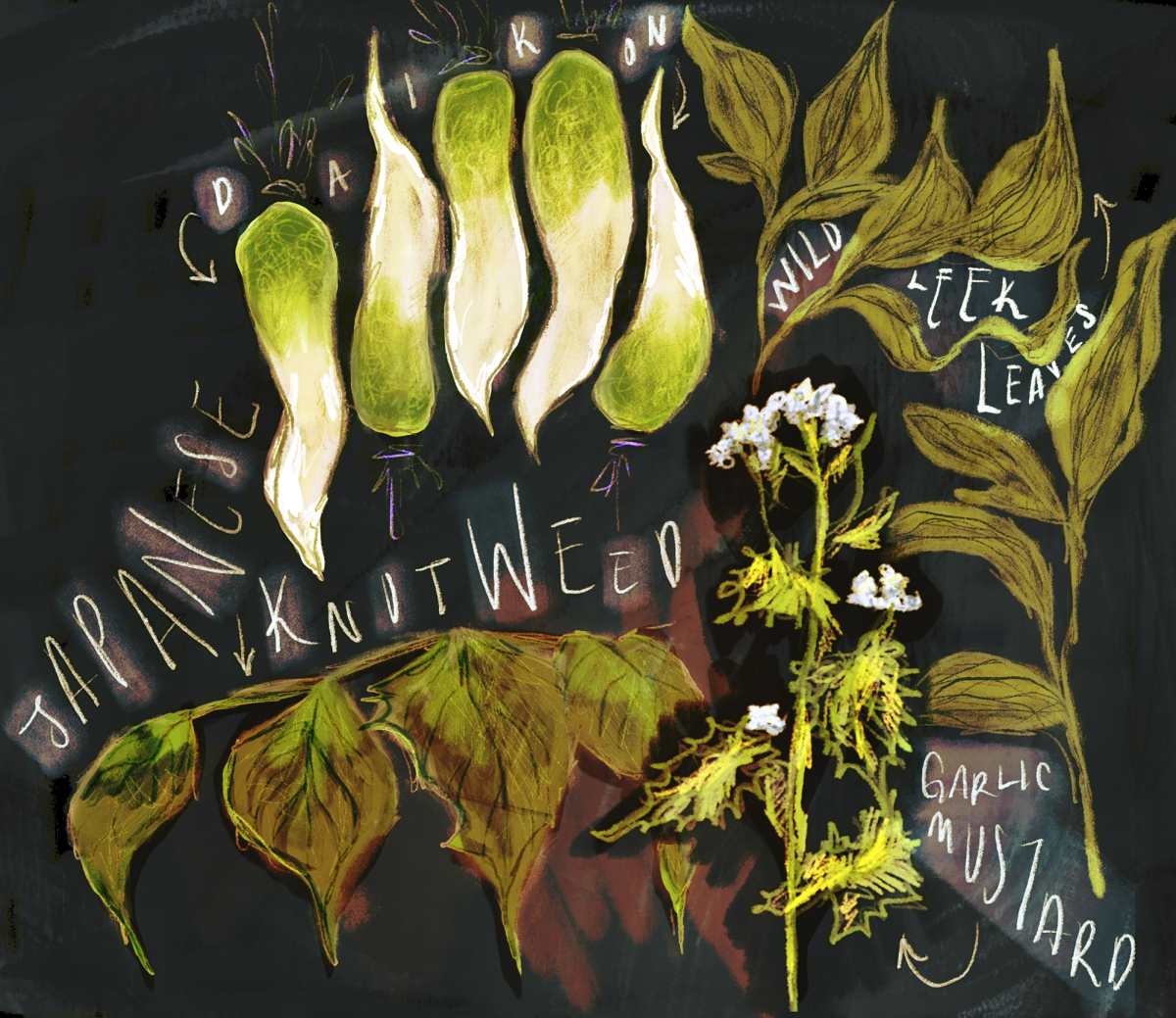
IP: I think it really depends on your personal relationship with the land and the health of the land. One of the great privileges of knowing so many farmers is getting to see how carefully they steward their land. Also, taking classes like “Field Botany and Plant Natural History” with Professor of Biology Joan Edwards has helped me to think more closely about the land and the environment, specifically in Williamstown and in the Western Massachusetts region. I think it’s important to engage with the environment in a way that matters to you.
DP: How have you engaged with the environment during your time at the College?
IP: Last year, I interned at the Zilkha Center garden. It was fabulous. We got to tend to the garden plots, plan for the future growing season, and meet some lovely people within the community who have a large presence either gardening or farming. Thanks to the work of our summer interns, everything that was planted in the spring while I was there grew beautifully. This fall — even though I haven’t continued my internship — we got to put together a produce pickup from the garden, which was a great way of sharing what we grew on campus with other students.
DP: Looking back on your junior year, do you think it is playing out the way you thought it would? How did you envision it?
IP: It’s definitely not what I expected, in a good way. I applied for a local farm job in August or September of last year, and I’ve been working there around two days a week, which is nice because it kind of breaks up the days that I have classes. It’s a nice balance of still being within the community but being off campus and getting to meet new people. I have the lovely experience of constantly learning new things thanks to the people that I work with.
DP: What is an important lesson that you learned this year?
IP: Try new things. Don’t feel shy to explore something that you’re unfamiliar with. If it interests you and you have the opportunity to explore, go for it. Even if it’s challenging at first, the experience of learning and growing is entirely worth it.
DP: You’re a rising senior. Do you have anything that you want to accomplish before you graduate?
IP: I’d love to do some sort of project related to agriculture in the community, and I would like for it to take an artistic route. I’m really interested in the arts, and I want to try to find some intersection between the environment and the arts and develop a project that joins both. I think art is a great way to communicate advocacy.
DP: Fun questions now. The Winter Olympics have recently wrapped up — if you could be an elite Olympian, what would your sport be?
IP: Figure skating. The crowd’s attention on the ice would be a little intimidating, but it’s always been my favorite event to watch. It’s very entertaining, and I like to see everything that goes into it.
DP: We’re moving into warmer weather: What is the first thing you’re going to do once it hits 60 degrees?
IP: I don’t know what I’m going to do with myself. I’m so used to the cold weather, I’ll probably just sit somewhere nice on campus in a T-shirt. It’s been months since I’ve gotten to do that.
DP: I think we can all relate. What is one specific class that you’ve taken that you think should be a requirement to graduate?
IP: I really, really enjoyed Professor Edwards’ field botany course. I think it’s my favorite course I’ve taken so far in college. I loved the experience of not only getting to know my classmates out in the field but also cultivating an appreciation for local plant life and all that goes into the greenery that we see in the spring.
DP: Awesome. What is something interesting that you think the College community should know?
IP: One time I found some really cool rocks down by the Hoosic River. If you take them to Professor of Geosciences Emeritus Bud Wobus or another geology professor, you can have a really interesting chat about not only local geology, but just interesting rocks in general.
DP: That’s super cool. Last question – spring semester is going by pretty quickly, so how can students on campus have more fun for the rest of the term?
IP: It’s kind of cliché, but being more spontaneous. I haven’t always been the best at that, but it goes hand in hand with trying and exploring new things, and just seeing where opportunities can take you.