Dining hall meals are a mouthful — and not just literally. Whether students are grabbing a plate of lava lava shrimp, a fungus among us burger, or a wet beef burrito, the names of menu items are often as intricate as the dishes themselves.
According to Senior Director of Dining and Auxiliary Operations Jeanette Kopczynski and Assistant Vice President of Dining and Auxiliary Operations Temesgen Araya, the College generally follows a standard naming format which aims to keep menu items consistent across Whitmans’, Driscoll, and Mission. Any food item can appear at multiple dining halls, although each dining hall attempts to serve different food on any given night. On Thanksgiving and other days when campus-wide meals occur, dining halls all serve the same dishes.
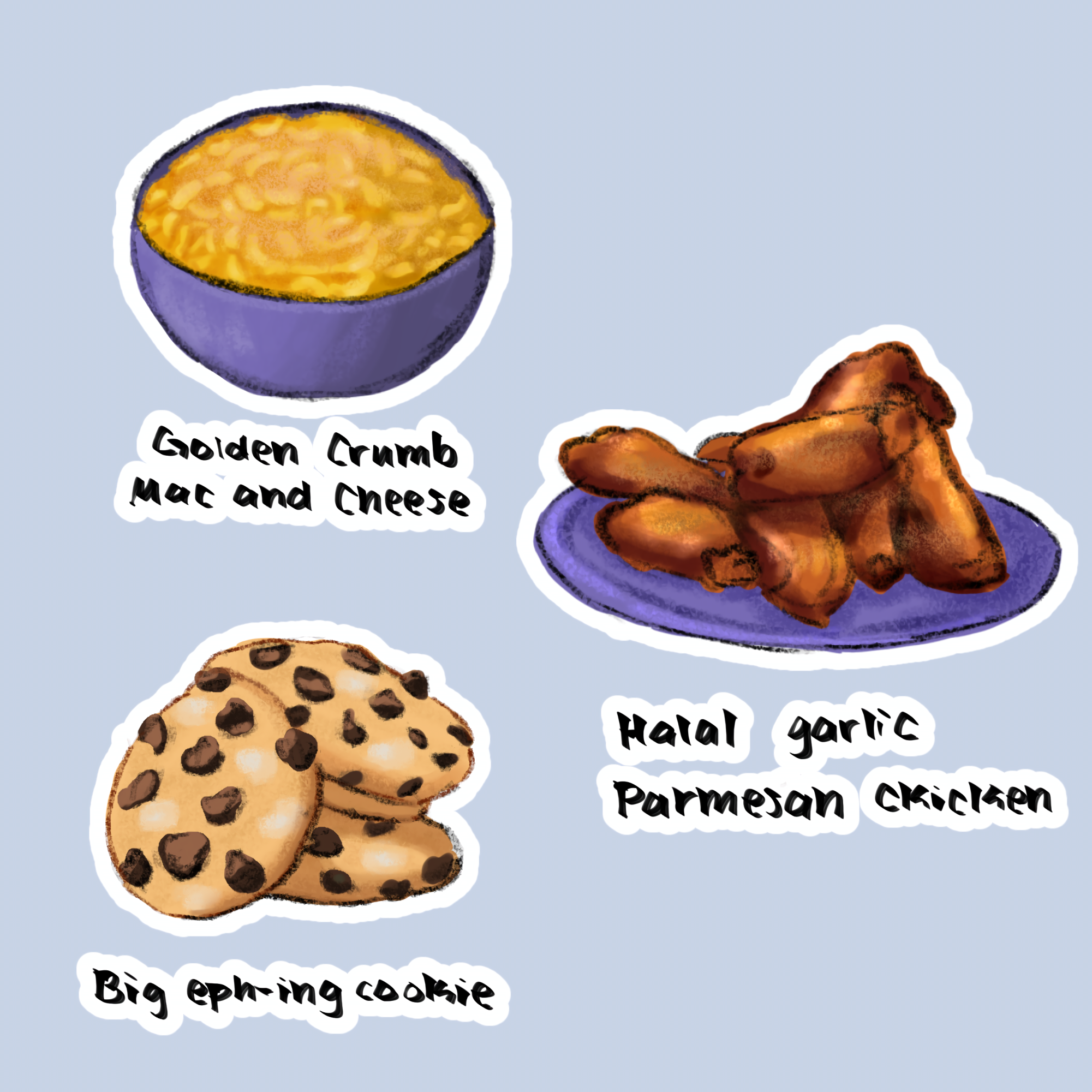
The traditional format includes the main flavor — for example, garlic, miso, or buffalo — the cooking method, and the name of the food itself (such as tofu, chicken, or pasta). If the items are halal, they receive a “halal” label preceding the name.
Some menu items include exciting adjectives that draw extra attention on the food line, including zesty cheese sauce, loaded vegetable pizza, supreme edamame salad, and smacking sauce.
Dining Services also has occasional opportunities to spice up their naming schemes, Kopczynski and Araya wrote in an email to the Record. Themed dinners like Winter Carnival often are the perfect opportunity for dining to go all out with creative names for menu items. First, a committee overseen by Dining sets the theme for these dinners. Then, the dining team creates distinctive menus that reflect the spirit of Winter Carnival, which they present to committee members. This year’s “Game of Thrones” themed Winter Carnival dinner in the dining halls was called a “Feast of Seven Kingdoms.” Among the offerings were a Riverland Greens salad and Wilding Boar Ribs.
Before Dining serves a menu, its staff writes a new set of recipes, tastes the items, identifies the necessary ingredients, and forecasts student demand for the items. Once a menu goes through this process, unit managers and first cooks — the head chefs — select menu items that best fit their production capacity and equipment, Kopczynski and Araya wrote.
The dining team also collaborates with student groups to come up with ideas for themed dinners. The Black Student Union works annually with dining to plan a Black History Month dinner, which provides opportunities for creative dish names.
Fun events for students, like the annual Culinary Carnival — hosted this year on April 8 — also allow Dining Services to choose unusual names for menu items. This year’s Carnival included items like the new purple cow bark — a chocolate-covered pretzel clump — and the big Eph-ing cookie — a marshmallow-filled chocolate chip cookie.
Students can also help shape weekly menus, although dish names remain up to the discretion of dining operations. Dining has a suggestion box where students can provide feedback on meals, request certain items, or contribute their thoughts about dining.