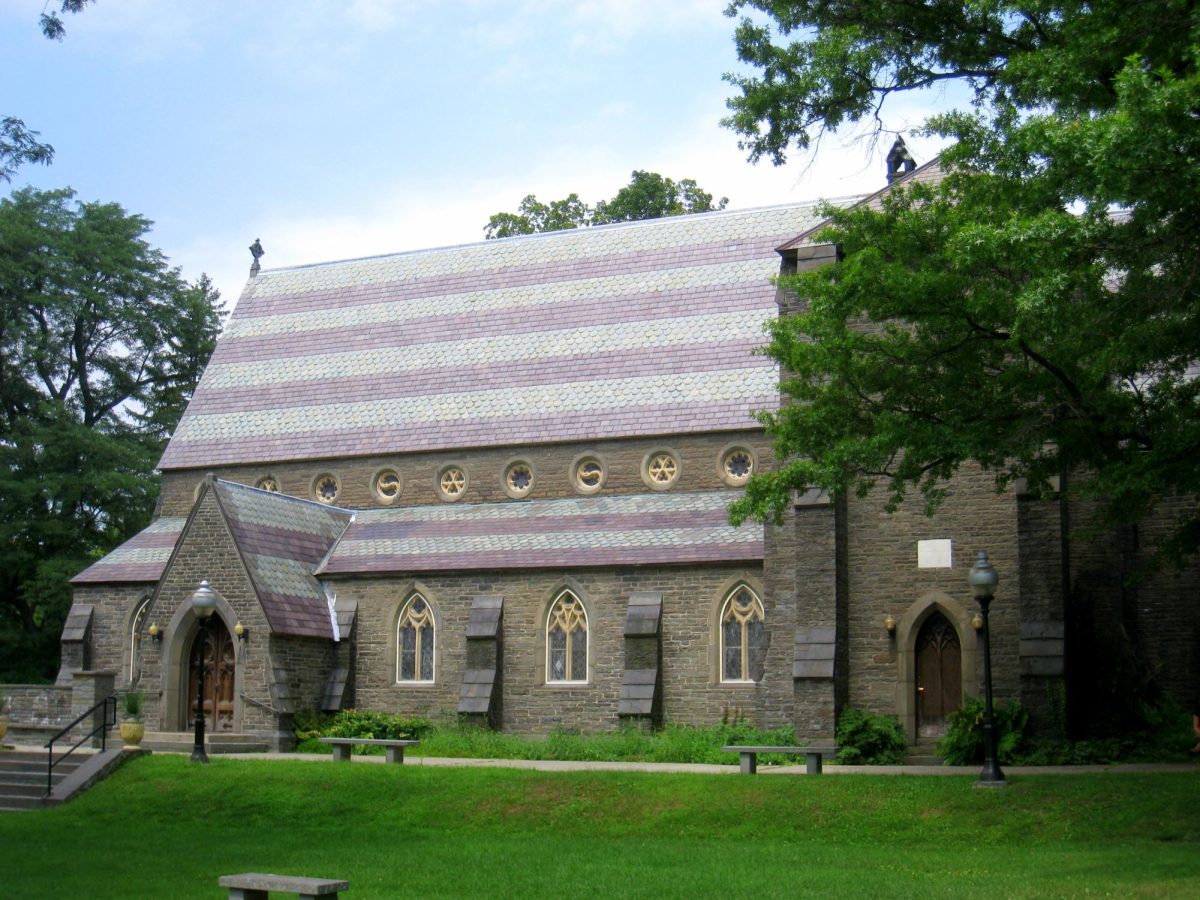

Students, faculty, staff, and community members gathered last Friday on Paresky steps to demonstrate for workers’ rights. The rally organizers — the Minority Coalition (MinCo) along with several other student and local groups — hoped to increase student political engagement and commemorate May Day by showing solidarity with College staff and other workers, according to MinCo Steering Committee Co-Chair Sam Samuel ’26 and Communications Director Oluwatosin Ibidokun ’27.
May Day, also known as International Workers’ Day, was established in 1889 to memorialize the events of a May 4, 1886, protest known as the Haymarket Affair. During a nationwide strike for an eight-hour workday, a peaceful demonstration in Chicago became violent when a bomb exploded and police officers fired shots into the crowd. The event led to an infamous trial in which eight anarchists were convicted for the bombing. Four of them were executed in 1887. Now, May Day, while not federally recognized, is known internationally as a day of solidarity and advocacy for both workers’ rights and social justice movements.
“The idea is that people are leaving classes or not going to classes in order to attend the rally and to show solidarity for workers,” Ibidokun said in an interview with the Record. “Workers on campus might not feel as comfortable … walking out of their jobs, but us as students have a level of flexibility that can be used to show solidarity.”
The protest included speeches from both local and College activist groups, a performance of Woody Guthrie’s “This Land Is Your Land” by Sayer Theiss ’29, and chants led by students from Williams Amnesty International. Students from Mount Greylock Regional School and local residents also joined the event.
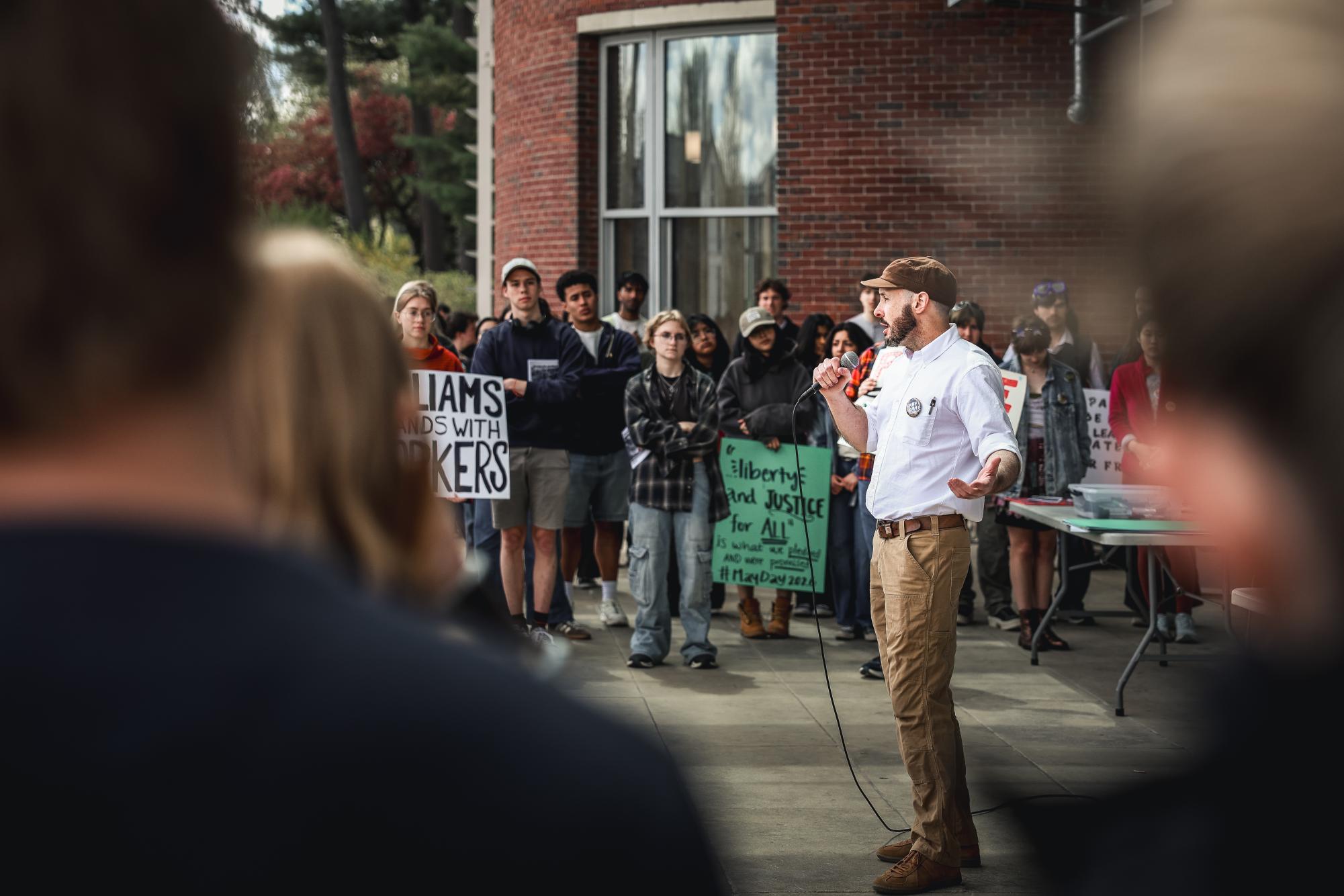
Leah Welner ’29 attended the protest with a “Williams stands with workers” sign. “Being around a community of people who are likeminded and all have the same vision of the world and all want peace … is really, really important to me,” she told the Record. “It’s just really uplifting.”
In advance of the walkout, the MinCo Steering Committee contacted department heads to ask them to cancel classes on Friday so that students could attend the walkout.
Associate Professor of Chemistry Katie Hart cancelled her Friday “CHEM 200: Advanced Chemical Concepts” class. She expressed concern about workers’ rights, both locally and nationally. “Above all, I’m concerned that we are too tired, busy, and jaded to believe we can do anything about it, when history has shown us that we, the workers, are the only ones who can,” she wrote in an email to the Record.
May Day Strong — a nationwide coalition of over 500 labor, democratic, and community organizations — created a map identifying more than 5,000 national May Day events leading up to the day, including the walkout at the College.
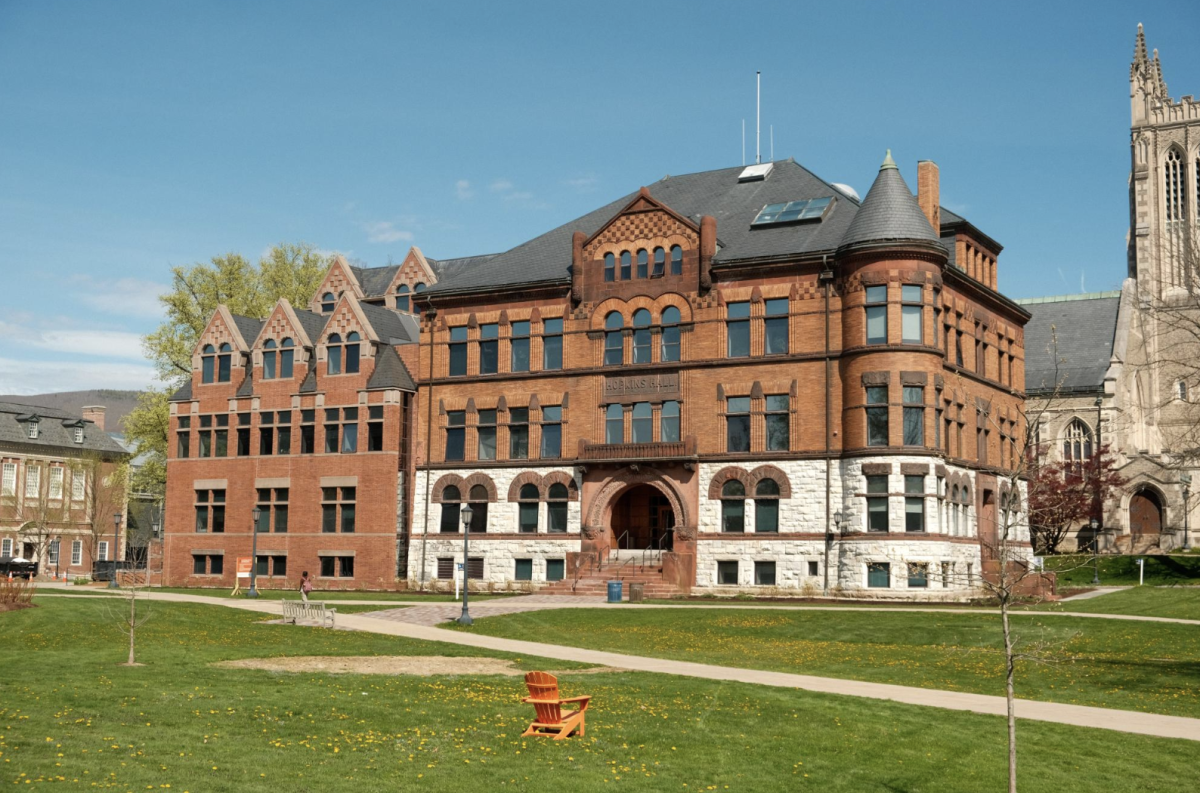
Organizers of the walkout hope that the event will reinvigorate the campus activism that was central to MinCo’s early history. In 1969, student members of the Afro-American Society occupied Hopkins Hall, demanding the addition of African American studies to the College’s curriculum. In 1993, the Concerned Latino/a Students group led a hunger strike protesting the College’s lack of a Latino/a studies department. “We were hoping, alongside the Davis Center, [to revitalize] civic participation and protests on campus,” Samuel said. “We think campus should be more involved in that sense.”
The walkout was also spurred by a growing desire among faculty and staff, as well as students, to form a labor union or organization on campus, according to Arlo Varon ’29, a member of the steering committee for the Williams College Youth Democratic Socialists of America. “A lot of people in the labor scene at Williams are trying to gather and gain support for some kind of labor union,” Varon said in an interview with the Record.
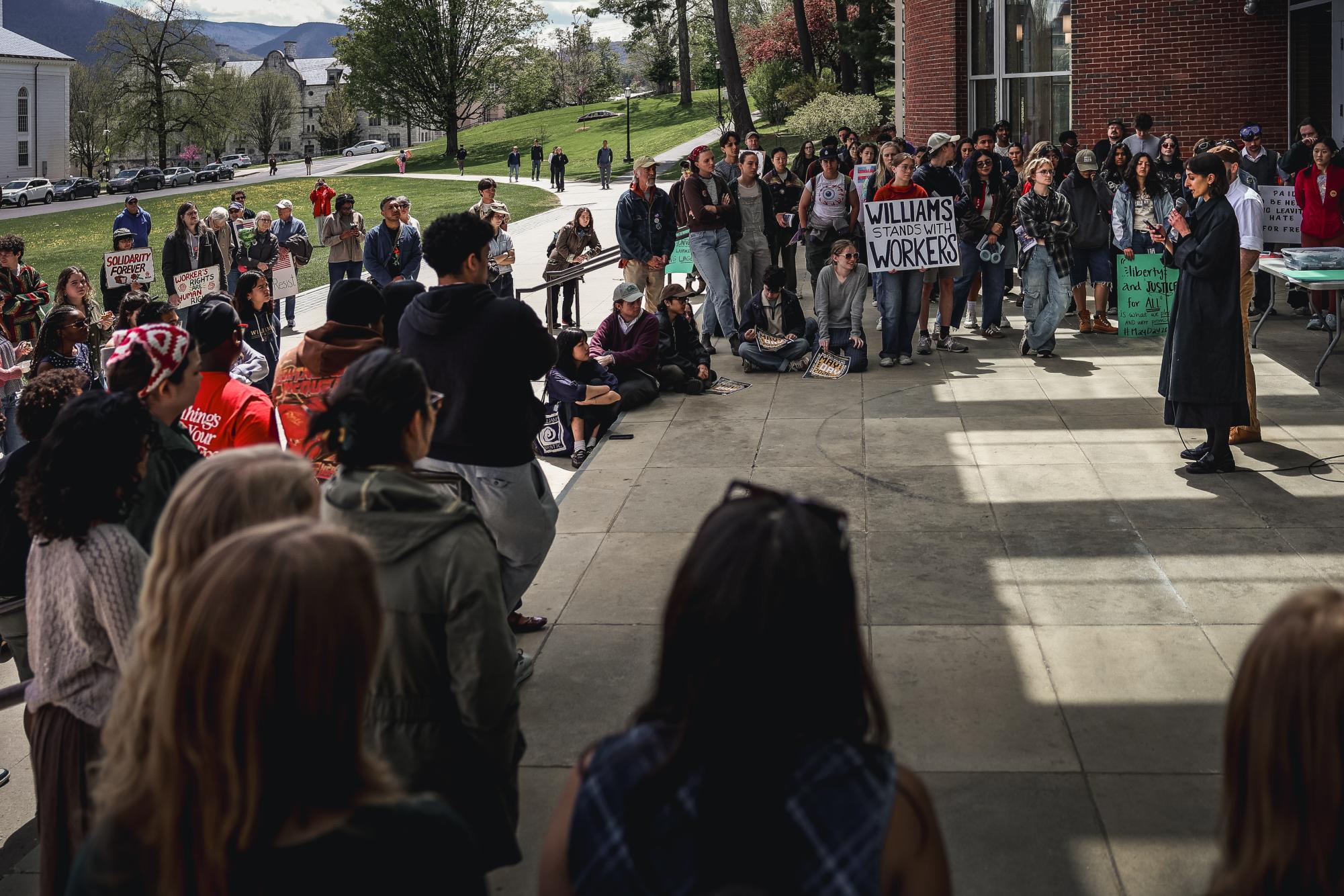
According to Samuel, showing solidarity with College staff was crucial. “Even if students can’t participate in the rally … students also are encouraged to have a conversation with staff on campus [and] build relationships.”
The organizers see labor activism as extending to student workers, too. Ibidokun referenced the recent closure of the FabLab and Makerspace as an instance in which advocacy succeeded in championing student workers’ rights. “There is an impact that comes from organizing,” she said, referencing the meeting between students and President Maud S. Mandel that resulted in the space’s reopening in April.
Although the walkout was hosted at the College, it was not exclusive to students. The organizers intentionally opened the rally to the broader Town community. “The College community extends beyond just the College,” Varon said. “And there’s a bit of a divide, I think, especially historically, between those two — between the people of Williamstown and people attending Williams College. We’re making the case that that [divide] shouldn’t exist and doesn’t need to exist.”
At the walkout, students, staff, faculty, and members of local activist groups spoke. Assistant Director of the Davis Center for Intergroup Relations and Inclusive Programming Firas Shennib gave a speech about the complicity of the College in what he referred to as the “treadmill of labor.”
“This place is made into a bubble so you cannot see the blood that sits beneath you, so that you cannot see the blood under your feet,” he said. “I want to see more of you angry.”
Shennib appreciated how the rally was able to connect likeminded people in the community. “I think a rally is a good way to get out a lot of energy and also to see that you’re not really alone in being horrified by what’s going on,” he said in an interview with the Record. “And I think it’s very easy to feel like you are alone in that way.”
Correction: A previous version of this article mistakenly indicated that Oluwatosin Ibidokun ’27 is a MinCo Steering Committee co-chair. She is the MinCo Steering Committee communications director. This article was updated on May 6 at 1:24 p.m. to reflect this.