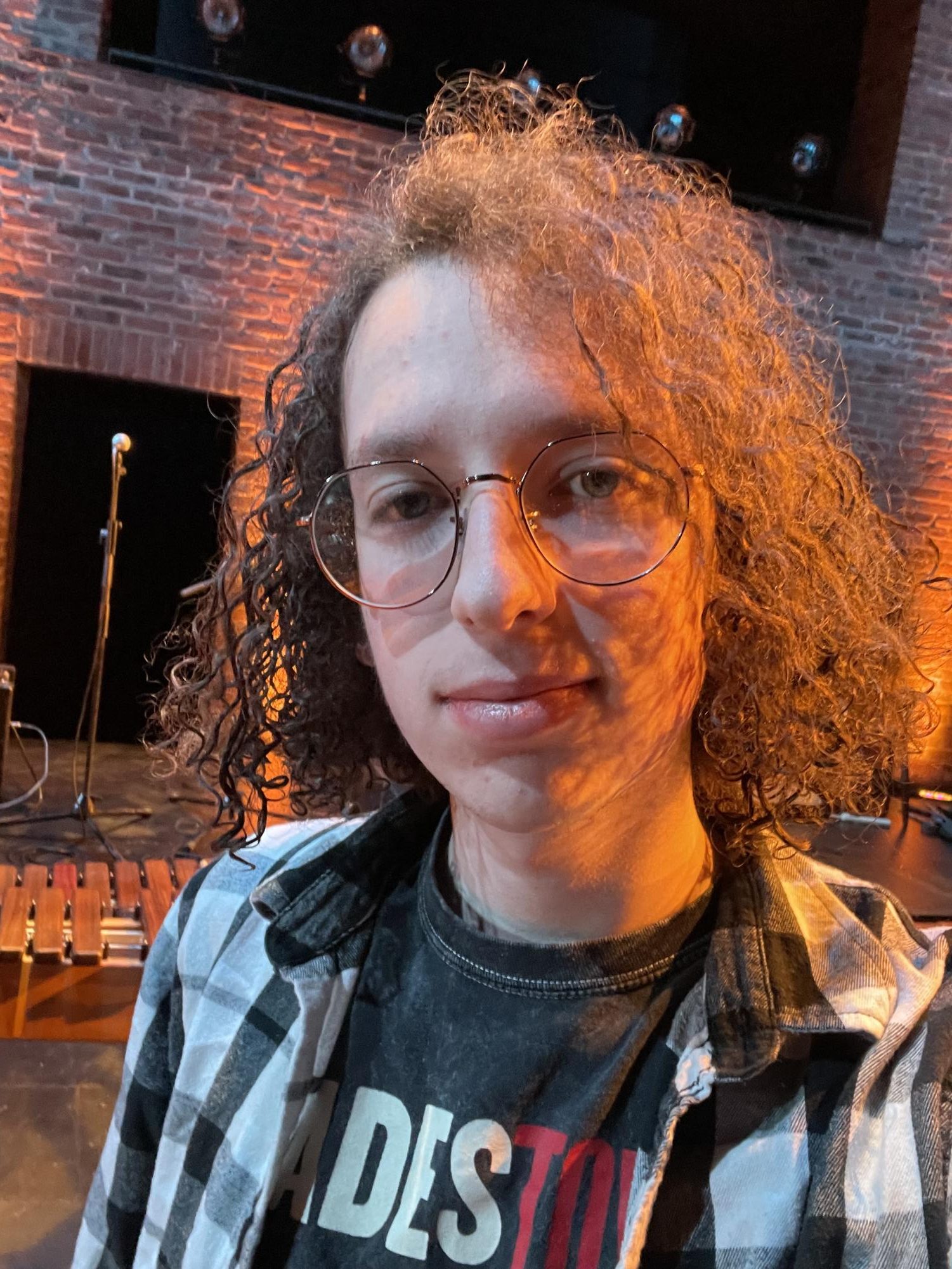
Anyone who has attended any Cap & Bells or Student Choreographers’ Coalition (StuCo) shows in the past four years has likely seen the lighting design of Cassie Aretsky ’26 in action. Her work has shaped how audiences have experienced almost every major student show during her time at the College.
Aretsky, a theatre and geosciences double major, stumbled into lighting design as a high school student after being randomly assigned to manage lighting for a student-run show. “I just sort of got assigned to do lighting,” she said. “And [I] fell in love with it.”
At the College, she began dabbling in theatre as an actress in Frosh Revue, the annual sketch comedy show put on by first-years during Friends and Family Weekend. Though she enjoyed acting in the show, her passion for lighting design drew her to working backstage. After wrapping up the show, she expressed her interest in doing technical work and got the opportunity to work on sound design for a Cap & Bells show.
Although she enjoyed sound design, Aretsky felt stuck in her role. That spring, she saw the light, literally. “In the spring semester of my freshman year, I got asked to do lighting [design] for the StuCo concert,” she said. “And after that, I just started doing more and more lighting design.”
When she first came to the College, few people knew how to design lighting for shows. This is no longer the case, according to Aretsky. “I think that [the lighting designer] community really only formed after I got here, and before then, there weren’t as many people doing lighting,” she said. “And I think that that’s really been a good thing to see.”
Lighting design is a multi-step process, Aretsky said. After carefully reading the script, the lighting designer identifies every moment or set piece that needs lighting. This includes everything from making sure actors are visible to creating special lighting effects. All of this is then mapped onto a light plot — a diagram showing where the light fixtures are hung in the theatre.
Even though the process of lighting design is collaborative, the lighting designer can exercise creative freedom when realizing the vision of the director, Aretsky said. “Usually, you’re given a vibe or an idea to work with, and then it’s up to you to figure out how to implement that,” she said. “Perhaps a director would say, ‘I want it to look more magical,’ and then it’s up to you as the lighting designer to figure out what magical means in terms of lights.”
Often, the bulk of the lighting work happens during the final rehearsals, when all the lighting cues are finalized with the actors present on stage. “I think my favorite part is being in tech [week] and making it all work with everyone else … the director, the stage manager, the scenic designer, the costume designer, the sound designer, and the projections,” Aretsky said. “[We pull] it all together to be one cohesive thing.”
During her sophomore year, Aretsky worked as the assistant light designer for the theatre department’s production of Natasha, Pierre & The Great Comet of 1812 — her first time working with Calvin Anderson, visiting lecturer in theatre and a professional lighting designer. Until that production, Aretsky was completely self-taught and drew entirely from her personal experience. Aretsky gained further training when she enrolled in Anderson’s Winter Study course, THEA 285: Lighting Design for Performance.
“[THEA 285] help[ed] make sure I knew best practices for everything,” she said.
This semester, she is working on her most ambitious project yet: Doing the lighting design for 13 student-written plays as part of the Purple Valley Play Festival. “It’s the biggest project I’ve ever worked on,” she said. “It’s kind of overwhelming, but it’s also really fun to do something of that scale.” The Festival will run from April 23 to 25 at the Adams Memorial Theatre in the ’62 Center for Theatre & Dance.
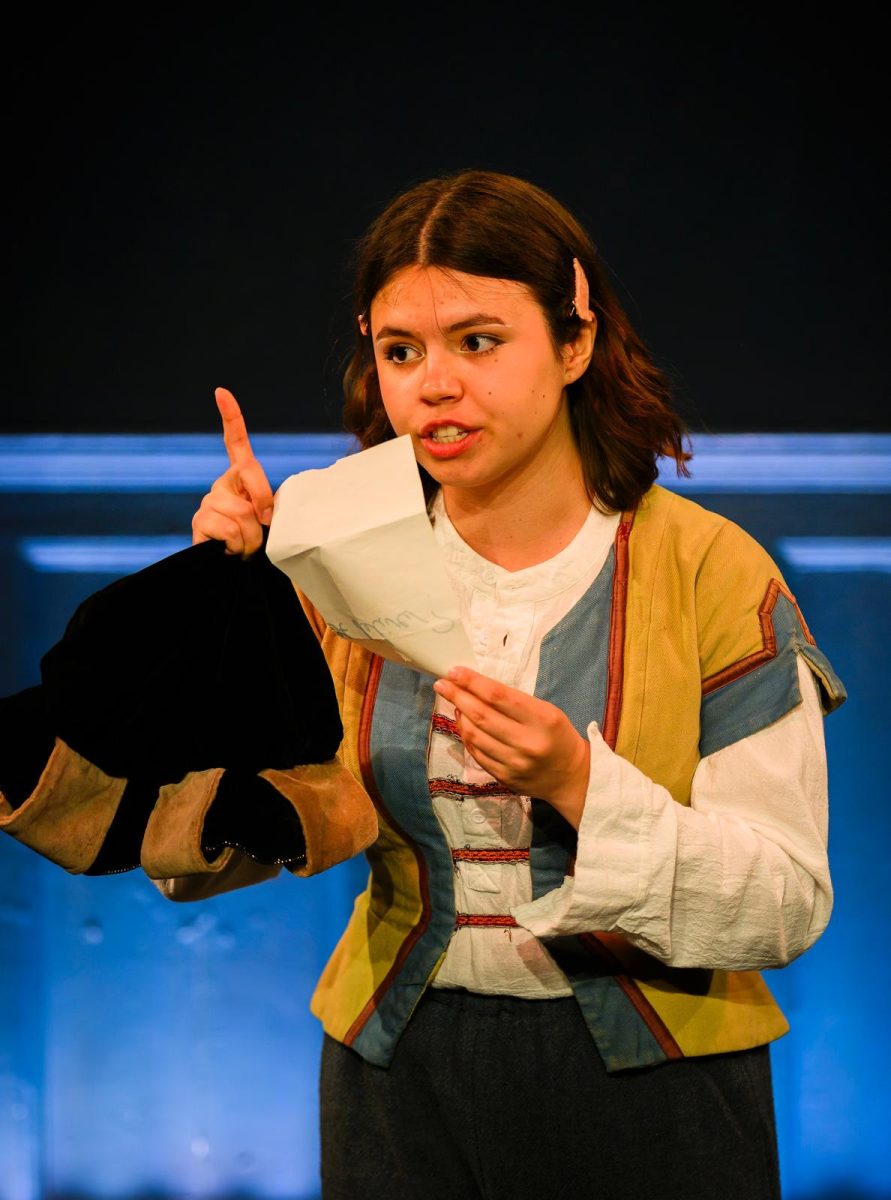
Beyond lighting design, Aretsky is also a playwright. Cap & Bells is producing her play, The Knight, the Dragon, and the Princess, this semester.
Whether designing lights or writing plays, Aretsky’s artistic ambitions won’t stop after graduation. She hopes to enter the world of professional theatre and continue to pursue lighting design.
“It feels redundant to say that doing lighting got me into lighting, but once I started doing it, I just couldn’t stop,” she said. “It’s kind of addicting. It really is.”