Amid rapid technological development and students’ increasing dependence on artificial intelligence, the College’s research librarians strive to ground students in an age-old concept: intellectual agency. They remain steadfast in their commitment to fostering inquiry, informational access, and the formation of lifelong research habits among students.
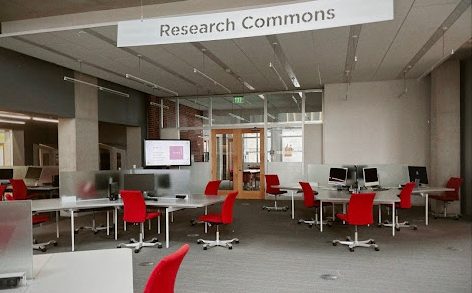
Located on the third floor of Sawyer and at Schow, research support at the College is led by a team of six full-time research librarians who work with students across disciplines. Available through walk-ins, live chat, and scheduled in-person or online consultations, they guide students in developing independent, critical approaches to finding and evaluating sources.
While students often focus on maximizing efficiency when they start their research, Head of Research Services and Library Outreach Christine Ménard emphasized that getting work done faster should not always come first. For her, the significance of self-conducted archival research lies in cultivating intellectual independence. “Our work is not to find the answer for people — it’s to empower people to find their own answers,” she said.
Research support often begins with a conversation, according to Ménard. A student brings an emerging idea, a set of sources, or a question to a librarian’s office. These conversations then extend beyond keyword searches.
Ménard described planting “seeds” in these meetings — questions that push students to zoom out from their immediate thesis and consider the broader academic context of their work.
She invites students to think critically about their sources, suggesting they ask questions like, “Why is this information available or not available?” and “Whose voices are represented in the body of scholarship — or not?”
Research and Instruction Librarian for Data Literacy Régan Schwartz, who taught in classrooms and community organizations before starting in her current role, emphasized the long-term positive effects of learning source analysis. “Once you’ve built the capacity to inquire broadly, to search for information, and to evaluate and access and utilize it — that serves you well for the rest of your life,” she said.
As the research landscape shifts to incorporate new technology, conversations within the field frequently turn to generative AI. Schwartz said she asks students to think carefully about its appeal and its tradeoffs. “I’m having lots of conversations about what we trade for efficiency,” she said. “What do we gain, and what do we lose?”
Research and Instruction Librarian Irene Tournas approaches AI as a productive opportunity for renewed scrutiny. “[AI provides] a fresh backdrop with which to have some of the same conversations we’ve always been having about information literacy,” Tournas said. “[It generates] amazing, invigorating moments of critical reflection and dialogue about what these tools mean ethically and technologically in these different kinds of information environments.”
According to Schwartz, librarianship is defined by a commitment to critical engagement. “We can make a better world when we have more information to work with … and that can only happen with a free exchange [of information],” she said.