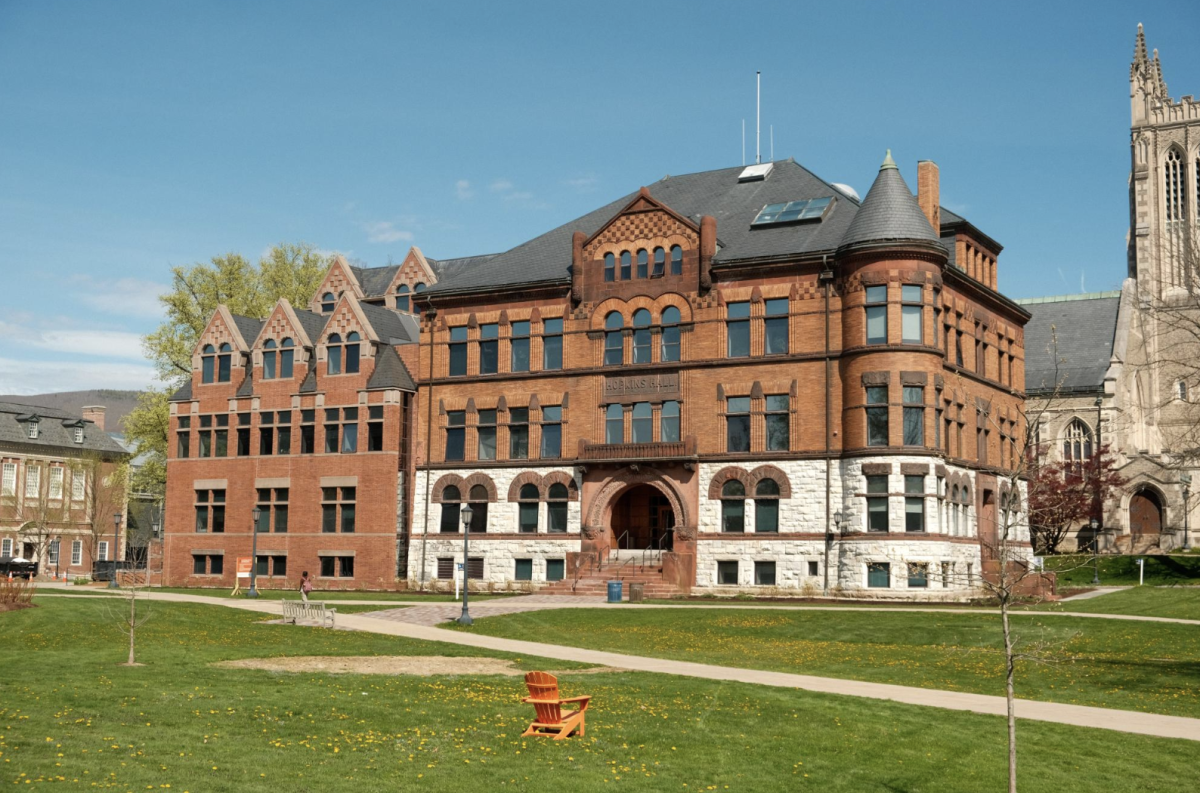
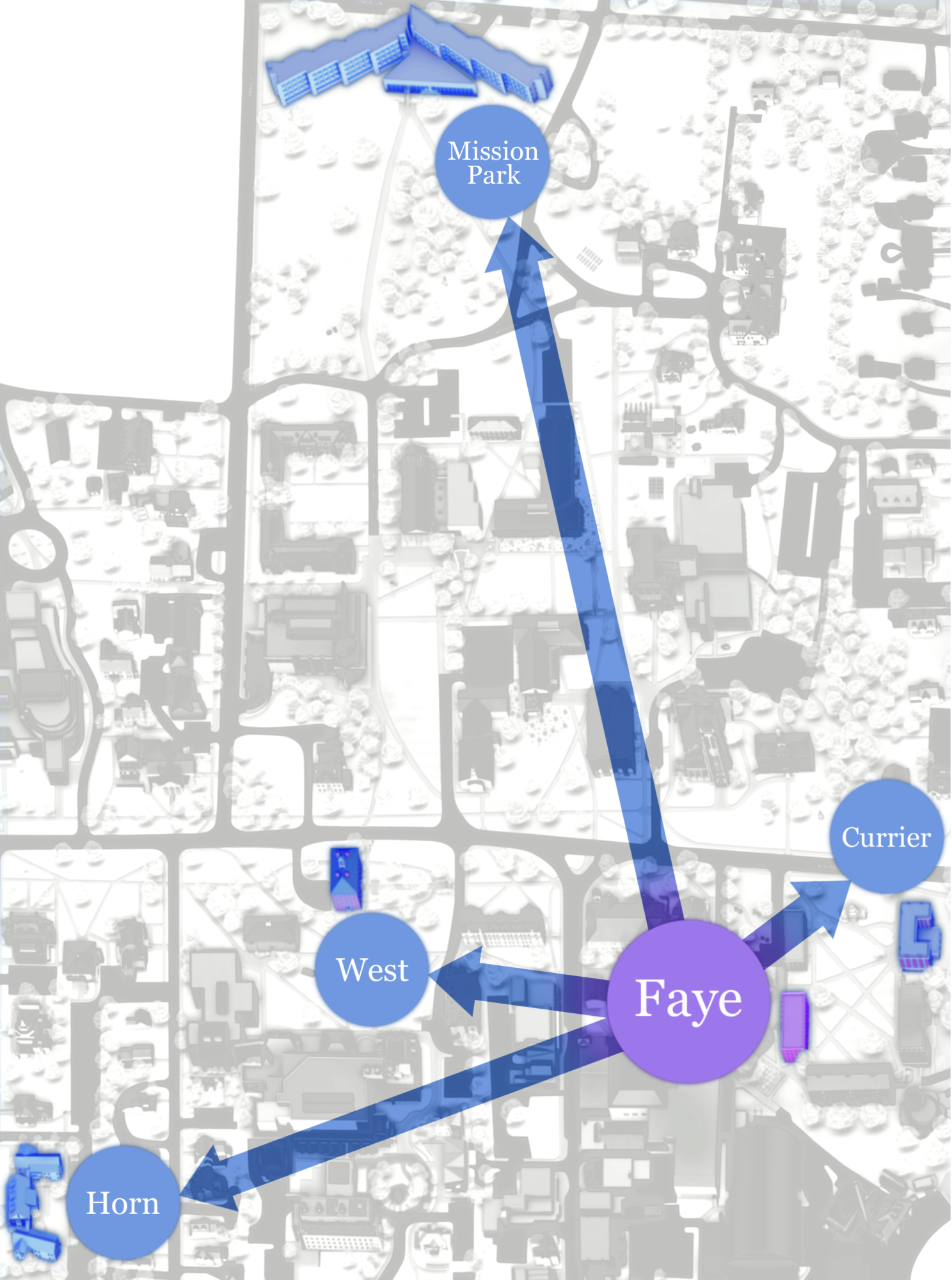
Fayerweather will remain closed through the spring semester following a flood in December. Faye residents were assigned to new rooms in Currier Hall, Horn, Mission Park, Prospect, and West College, dividing three first-year entries across campus. The dormitory may remain closed through the 2026-27 academic year.
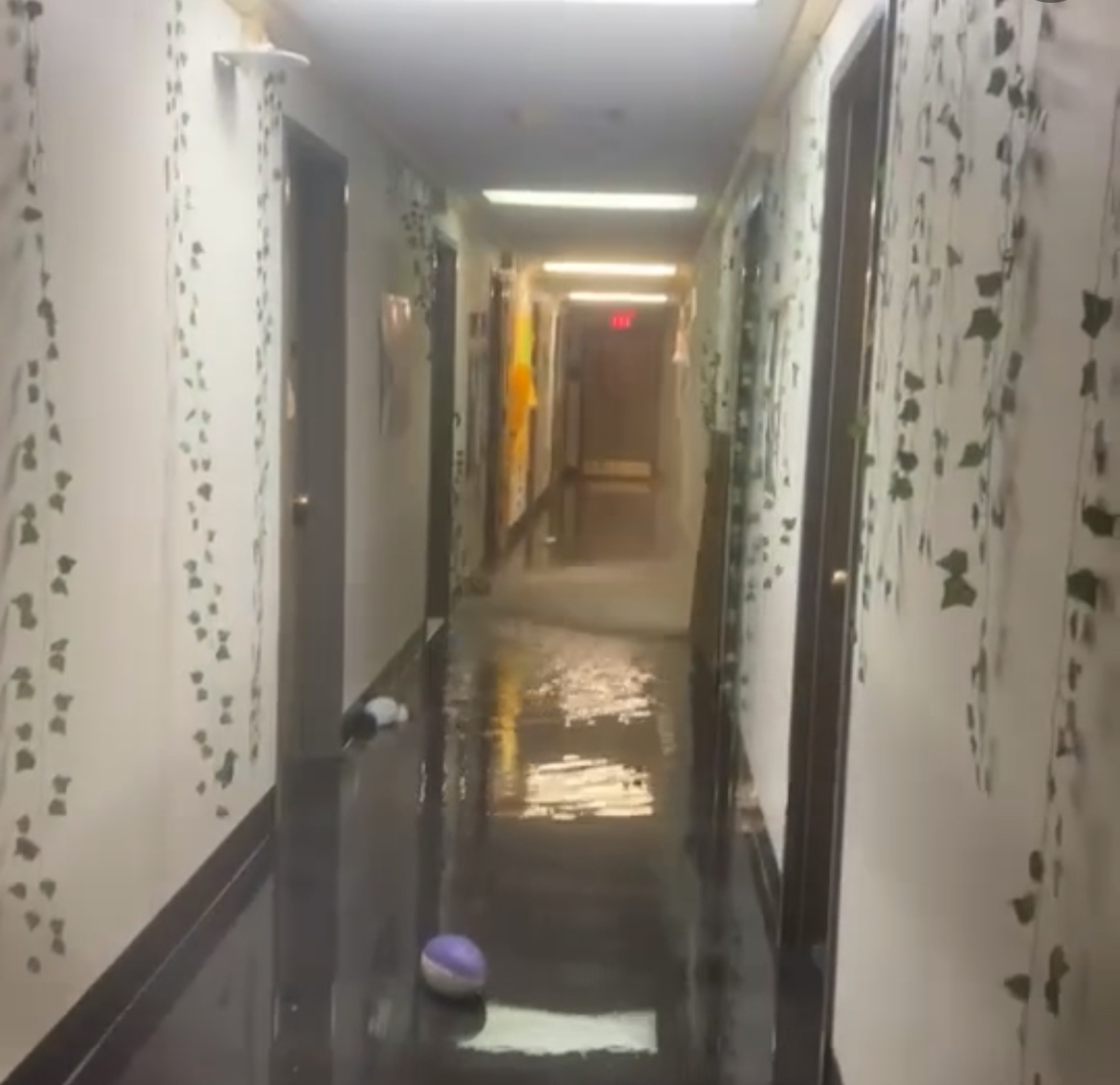
The flood began on Dec. 11 around 9:30 p.m., according to Associate Vice President for Student Affairs Jeff Malanson. Three students were tossing a small foam football in the hallway of Faye’s second floor when they hit and broke a sprinkler head, Malanson told the Record. “It was a magical hit and really bad luck,” he said.
Because the sprinkler was located directly over an electrical panel, the water immediately entered the building’s electrical system, Malanson said. The risk of electrocution made College staff reluctant to touch the building’s water control, he said. Instead, staff waited for the Williamstown Fire Department to arrive and shut off the water. During that time, the basement and first two floors of Faye flooded.
Caleb Kohn ’29 said he was in his second-floor room when he heard water cascading outside his door. “It was like ‘woosh,’ and I was like, ‘Ah man, this is not good,’” he told the Record.
“I opened my door, and there was a lot of water,” Kohn continued.
The building’s Junior Advisors (JAs) immediately began evacuating residents, Kohn said. College staff then gathered students in nearby Goodrich Hall, where they waited to receive new rooms for the night, according to Alden May ’27, JA to Faye One.
According to Malanson, 77 students received new room assignments that night. “The goal was to get people into new rooms as quickly as possible,” he said.
The building’s displaced residents were settled in their new rooms scattered across campus around 2 a.m., May said. Many students had final exams scheduled for that morning. “Everyone was a little stressed out, obviously,” May told the Record. Most professors rescheduled exams for impacted students, he said.
Despite rehousing all Faye residents, the College still has over 100 empty rooms available in case of other housing emergencies, according to Malanson.
Initially, JAs were told that their entries would be able to move back into Faye within a few days, but Malanson told the JAs in an email the next morning that the waiting period might be longer, May said. Over winter break, JAs found out that their entries would remain in their new rooms through the end of the spring semester.
Most students will remain in the rooms they were assigned the night of the flood, Malanson told the Record. A few students were relocated during Winter Study, he said, to accommodate returning upperclass students and to reunite separated roommate pairs.
College staff considered moving a building’s worth of upperclass students to create a new first-year hall and reunite entries, according to Malanson. That option seemed unfair to upperclass students, he said.
Zee Taylor ’27, JA to Faye Three, told the Record that she sees her first-years’ new housing as a disruptive change. “I’m worried in the spring semester about how people are going to be managing their class load without having their best friend next door to them,” she said.
All relocated students will receive additional housing points for next year’s housing lottery, according to Malanson. Students’ possessions were “minimally” damaged, he said, because the flood originated in the hallway and bedrooms were protected by closed doors. The College paid for the cleaning of wet or damaged possessions, Kohn said.
Because the building will require significant electrical work, Faye will remain closed until at least August, according to Malanson. During the repairs to Faye, Facilities plans to add common rooms to the building, though that may change depending on the project’s timeline and associated costs.
It is uncertain whether Faye will reopen for the 2026-27 academic year, according to Malanson. While the College hopes to complete repairs to Faye by mid-August, the building may be held out of the housing lottery in case of delays.
When the College announced that Faye would house first-years last spring, administrators told the Record that several double rooms in the building would be converted to common rooms. However, when the Faye JAs first visited the building, they found that there were no common rooms, according to May. Dean of First-Year Students Christina Walsh told them the College had determined that adding common rooms was against building code.
First-year common rooms usually house entry snacks and serve as a place for students to bond. Without them in Faye, the hallways became a central social space, May said. “The hallways really turned into the common rooms that we didn’t have in Faye,” he said — including a space for the game of football that broke the sprinkler head and caused the flood. The sprinklers in Faye’s hallways lacked protective covers, unlike those in other spaces on campus, according to Malanson.
May now lives on the top floor of West, the only member of his entry in the building, while his first-years mostly live across campus in Mission and Horn. “I feel very isolated,” he said. “To have none of my frosh in the building with me feels very odd.”
Faye’s entries are continuing to host snacks, and the JAs are working to keep their communities strong. Taylor and her co-JA, Lilah Gonsalves ’27, collected the decor from their entry and hung it on their first-years’ new doors. Taylor said that her first-years, while scattered across campus, still knock on her door in Mission to talk.
Walsh told the Record that she hopes to help Faye entries maintain community through all-building events, such as all-Faye snacks and an all-Faye ice skating event held last week, which she planned alongside Area Coordinators Josie Catalano and Carly Rieger.
“We’re going to try our best to continue some sense of normalcy,” May said.