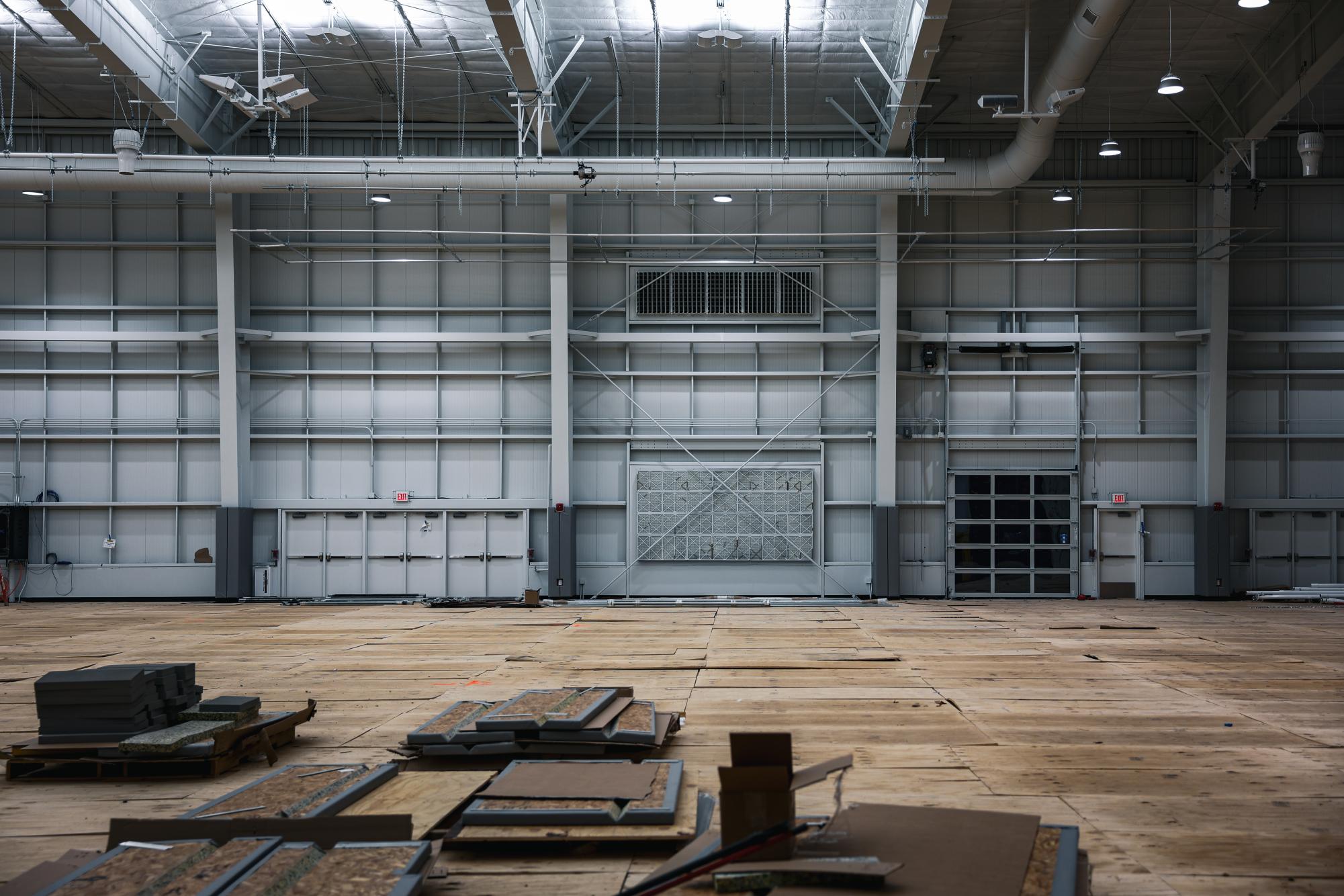
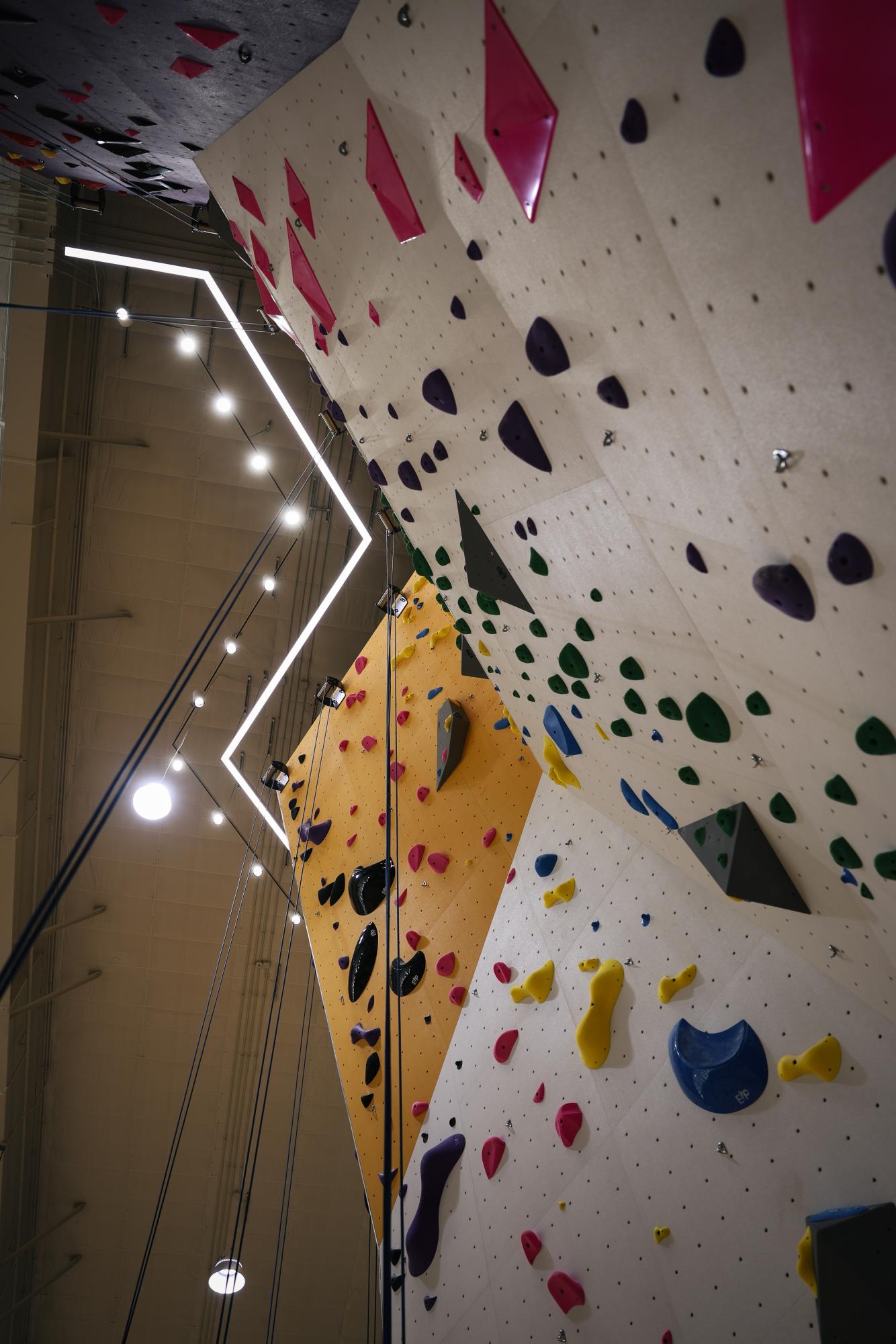
The Multipurpose Recreation Center (MRC) is expected to open in January. It will provide new spaces for varsity, club, and intramural sports practices and other recreational activities. The facility includes a 200-meter running track, indoor tennis courts, and a climbing wall.
The MRC replaces the Towne Field House, which the College demolished in 2023 after discovering serious structural flaws. Since the closure of the field house, varsity teams have struggled to find adequate practice space. The College began construction on the MRC last spring and forecast the project’s costs at $40 million.
The new facility was designed specifically to be twice as energy-efficient as Towne and is intentionally configured to serve as many athletic uses as possible, according to Associate Athletic Director for Facilities and Operations Jill Campbell.
Ahead of the MRC’s official opening, the Record toured the new building.
Restoring on-campus athletic facilities lost during Towne’s removal, the MRC contains four competition tennis courts, as well as a three-lane, 200-meter running track; a rock climbing wall; and designated areas for field events such as pole vault, jumping, and throws. The dark purple flooring with golden yellow lines also has markings for baseball and softball infields, all of which are designed to allow varsity teams alternative practice spaces during bad weather and high demand.
Currently, many varsity sports, such as track and field and tennis, travel to rented spaces for practice. Athletics has been forced to adapt to maintain programs while lacking a field house: It has transported students to Bennington, Vt., and North Adams; relocated crew equipment to Greylock; and adapted spaces in Lasell for baseball and softball practices.
Campbell said the facility will once again allow on-campus training for these displaced teams. She believes the building’s opening will represent a return to baseline rather than a dramatic change.
“It’ll be a big relief after being in this disrupted phase for the last couple of years [to] have this new place to utilize,” Campbell said. “The MRC really is seizing this moment to incorporate a better experience … than we’ve had on campus [in recent years].”
At the far ends of the building are large windows decorated with small dots, called fritting, that allow for increased visibility while protecting athletes from the sun’s glare while indoors. “When you look at it closely, it kind of makes your eyes [go] crazy, but during the day you can see the tennis team practicing out here, [and] at night if anyone’s driving, they can totally see us,” said Senior Project Manager Julie Sniezek.
These aspects provide not only a well-lit and pleasing space but an innovative one. In contrast to Towne, the MRC’s sustainable building envelope will be LEED Gold certified.
Sniezek said the building was the most financially sound decision the College could have made, considering both longevity and overall energy and cost efficiency.
As the space increases available campus facilities, the MRC’s opening will not just benefit varsity athletes. Campbell said that she expects some club sports, such as club tennis and rugby, to fill the schedule alongside varsity teams, since they have had a difficult time finding practice venues in recent years.
Rugby President Arthur Johnson echoed Campbell. “The MRC will provide a more expansive space with more oppurtunities to practice,” he said.
Additionally, athletic trainers have a designated space in the building, which signifies another return to the status quo, according to Campbell.
She said that sports medicine has been supporting varsity teams across their various venues of practice. “It’s just shifting that support from [that] multitude to a more consolidated space,” she said.
Efforts to get the building ready to open began several weeks ago and will continue through the holidays. Still to come are the activation of temperature regulation, schedule finalization, and inspection completions. Though opening the MRC is a complicated process, Campbell and Sniezek are optimistic.
“I was once told that I was too passionate about my work,” Sniezek said. “But I think that’s a good thing… We have a great team on [this project]. I want to walk away with something that I’m proud of, and I think [the MRC will] definitely be that.”