Most people page through the opinions section of newspapers like the Record and don’t give a second thought to the diversity of opinions displayed — but David Shipley ’85 does. In fact, he resigned from his job for it.
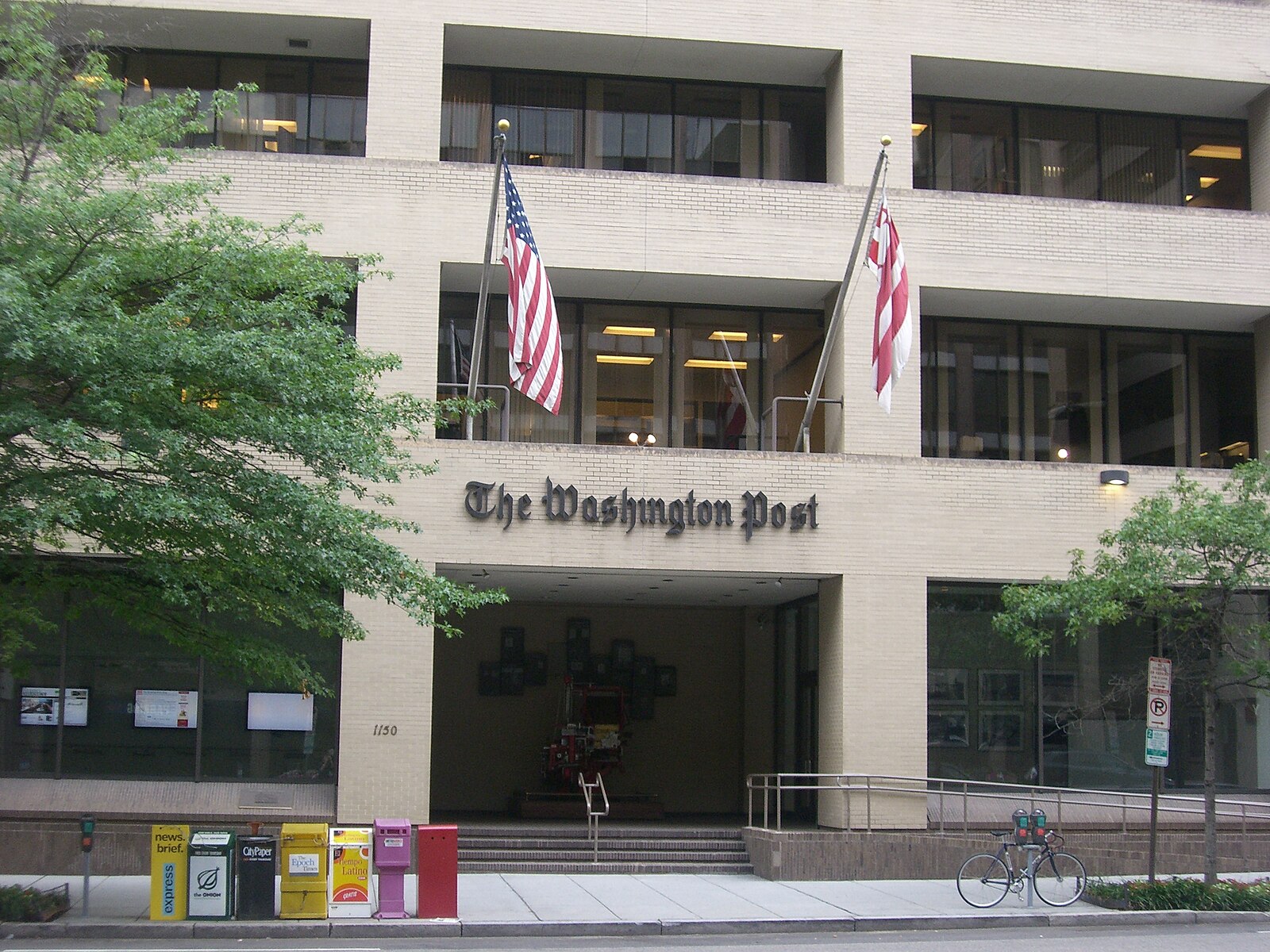
Shipley has spent nearly four decades of his career in editing. He started as an editorial assistant at publishing company Simon & Schuster shortly after graduating from the College, then worked his way up the world of journalism. Eventually, he was an opinions editor for The New York Times, then an executive editor of opinions for Bloomberg News, and most recently the lead opinion editor for The Washington Post. This past February, Shipley resigned from the Post after the paper’s owner Jeff Bezos announced that the opinions section would advocate for “personal liberties and free markets” and not publish opinions that opposed those values, per a statement from Bezos on X.
Shipley sat down with the Record to discuss his career in journalism and how its direction has been informed by his time at the College. “Williams gave me openness and prepared me to be light on my feet,” he said. “My strong memory [of Williams] is that there was enormous intellectual freedom and an enormous willingness to talk about things.”
Shipley’s experience at the College was particularly foundational to his work in opinions. “Robert Dalzell, a professor of American Studies, was really key to me falling in love with opinion writing,” Shipley said. “[Dalzell] would always lead his students toward surprise. He would take a set of facts that you thought would lead one way, and by the end of class he’d flip everything on its head and something else would be revealed. This dexterity was a big gift from him.”
As a result, Shipley holds one especially deep conviction from his time at the College. “It’s important to be challenged, to listen to that challenge, and then to make up your mind,” Shipley said. “I’ve been privileged to work at publications that allow for this, and encourage it in their readers.”
Upon graduating, Shipley received a yearlong Watson Fellowship for international and intellectual exploration which he said he spent “collect[ing] ghost stories in Ireland and India.” During his travels, Shipley became increasingly eager to read a book that wasn’t already in backpack when his trip began, so he was elated when he came across a biography of Maxwell Perkins, the man who edited the work of vastly different literary titans like Thomas Wolfe and Ernest Hemingway. “I was immediately interested — I thought, ‘This is something I’d love to do,’” Shipley said. “I was captivated by the puzzle of editing. Also, I thought, ‘How could the person who edited Wolfe also have edited Hemingway?’ And yet, here Perkins was … able to help them both. I absolutely loved that.”
Once he returned from India, Shipley crashed on the New York apartment floor of a friend from the College until he found a job as editorial assistant for Alice Mayhew, a famed editor at Simon & Schuster. Though he started by keeping her calendar, Shipley learned the craft of editing under Mayhew. Eventually, he was hired as an editor for The New York Times opinion section, which wanted someone from the book publishing world to “marry novelists with newsy subjects,” according to Shipley.
Editing opinions was a perfect intellectual fit for Shipley. In 1970, with vibrant political discourse at the center of American life, Times editor John Oakes created the op-ed page (positioned “opposite of the editorials” in the newspaper) to allow “the intelligence of the world to sweep across the page,” as Shipley says, and to democratize the newspaper with opinions that explored perspectives other than those of the editorial board. Shipley’s work on the nation’s most well-read op-ed pages coupled his interest in editing with his steadfast belief in the importance of intellectual freedom and exploration.
After all these years, Shipley still believes in the essential function of a newspaper’s op-ed section. This belief was at the center of his resignation from the Post. Bezos, the paper’s owner, views this function as antiquated in the internet era. “There was a time when a newspaper, especially one that was a local monopoly, might have seen it as a service to bring to the reader’s doorstep every morning a broad-based opinion section that sought to cover all views,” Bezos said in his statement explaining the Post’s change in policy regarding opinions. “Today, the internet does that job.”
Shipley pointed out that the internet doesn’t have an editor or operate with a concrete set of facts. “We used to have publications that everyone read,” he said. “This made it easier to find consensus on what we imagined the truth to be. That’s no longer the case. The more fragmented things become, the harder it is to have an agreed upon version of reality.” Shipley believes that the point of a widely-read publication should be to challenge its readers, no matter what their perspectives may be, rather than reinforce their preconceptions. “[Bezos] was very open with me in these conversations … but I think that spaces that work hard to put opposing views together, that are focused on trying to have a curated, pluralistic debate are really special and rare,” Shipley said. “I believe in the guiding idea of a space where there are no ‘no-fly zones,’ where everything potentially has a home.”
Despite having dedicated most of his career to prodding the world to explore a diverse range of perspectives, it wasn’t until after his resignation that Shipley has found more time to do some exploration for himself. “This is the first time in a long time where I’ve had a chance to test my assumptions without a lot of other things going on,” he said. “I’m also excited to see what the Williams community produces in the world of journalism … to see what they try to create that explains the world and makes us all smarter.”
Figuratively, Shipley is back where he started: sitting in Robert Dalzell’s classroom, in the middle-of-nowhere Massachusetts, curious about how everything works and open to new opinions.