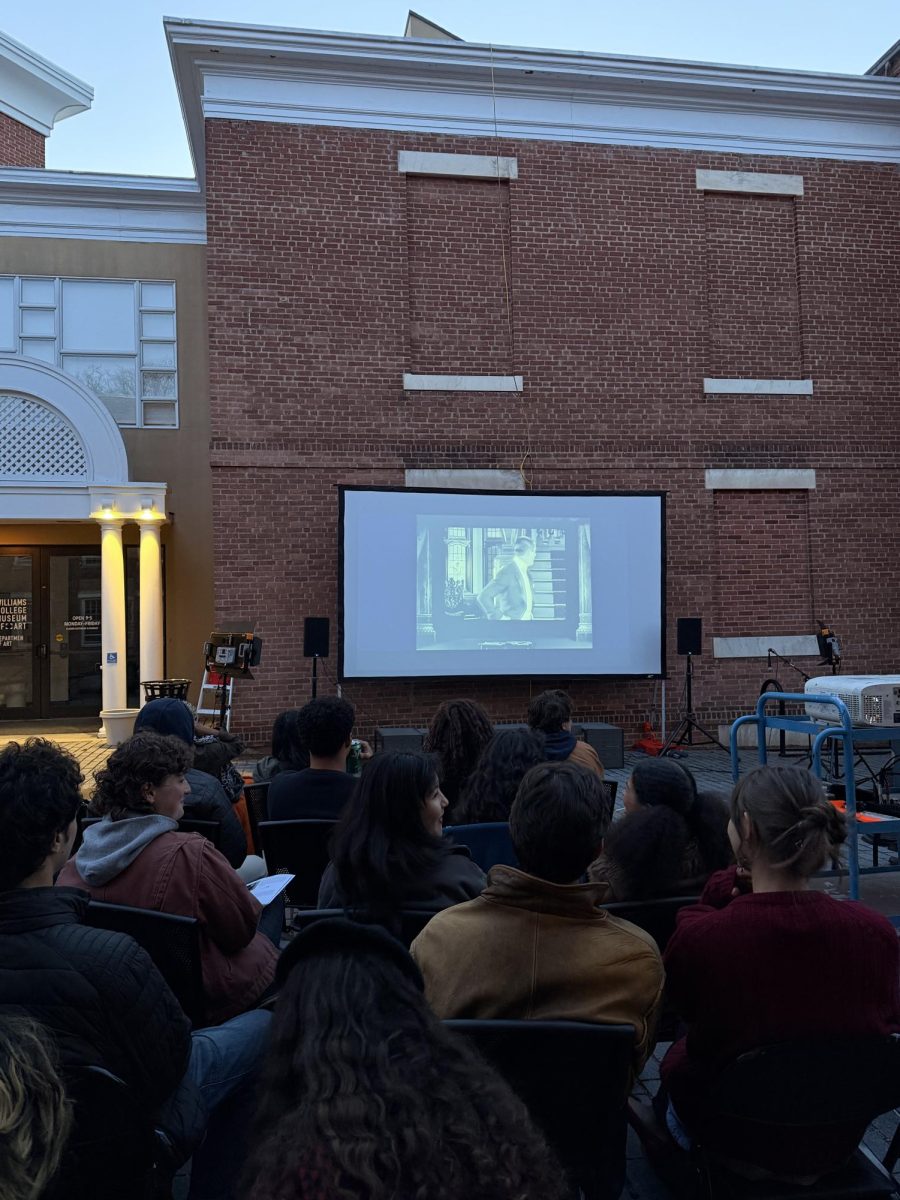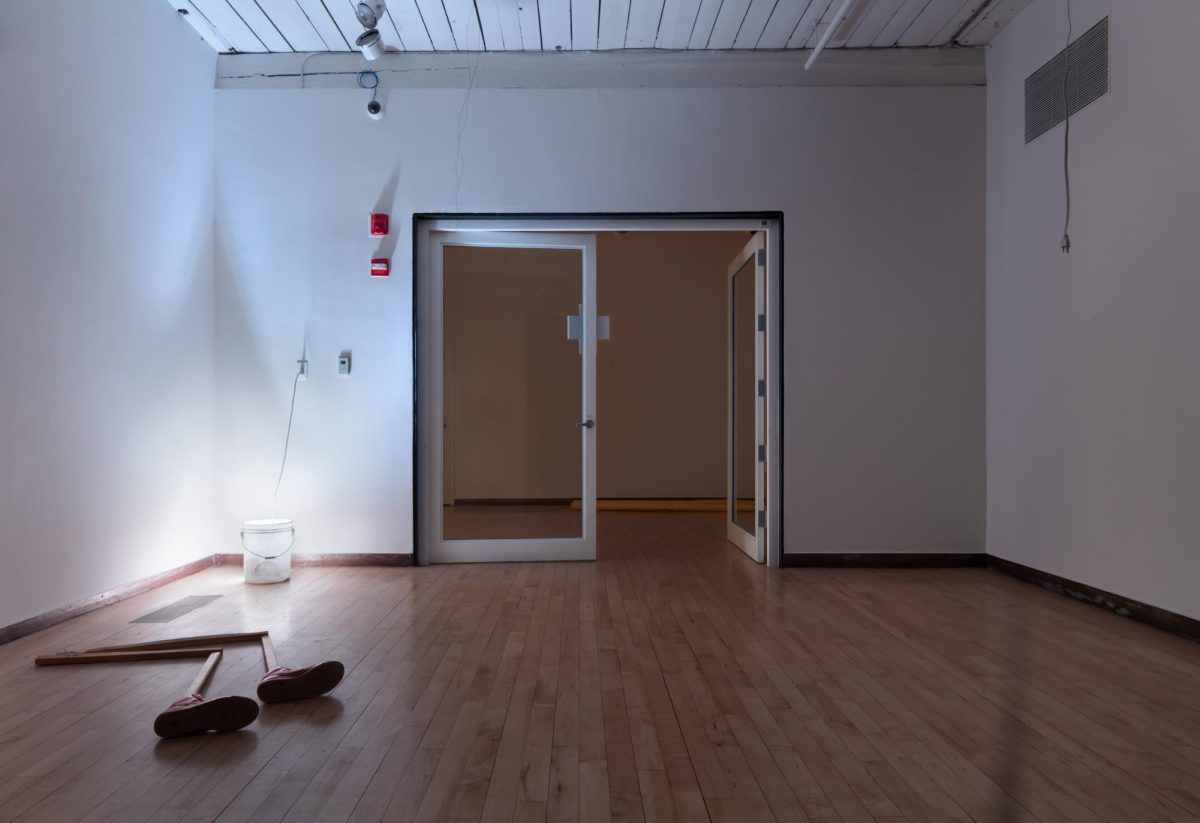

One Battle After Another: Living Beyond Disaster in Tallevast opened in the Spencer art building on April 16. The exhibition displayed a mix of photographs, archival newspaper clippings, documentary film, and objects from Tallevast, Fla., a small, predominantly Black community in Southwest Florida that has faced decades of environmental contamination. The exhibition, which closed on Tuesday, was funded by the Africana Studies Department and the Center for Learning in Action and was led by curators Ziwei Lin ’27 and Beneyam Hassen ’28 alongside co-curators Daniela Odong ’28, Sara Fevrier ’28, and Shiori Ono ’28.
During the Cold War, an industrial plant in Tallevast extracting the element beryllium for nuclear warheads released toxic chemicals, namely a highly toxic, colorless liquid called trichloroethylene, into the surrounding soil and groundwater. Today, the effects of that contamination continue to impact daily life for the community through low property values and ongoing health concerns, including increased cancer risks.
The inception of One Battle After Another began in Professor of Africana Studies James Manigault-Bryant’s Winter Study course, AFR 24: Touring Black Environmental Futures in the New South. Students in the course traveled to Tallevast to interview community members and document their experiences firsthand.
The exhibition also included soil samples that Sam Drescher ’26 collected in Florida for his senior thesis in chemistry, which quantifies chemical contaminants in the soil.
When entering the exhibition, viewers first see a photograph taken by Hassen while in Tallevast. He positioned the piece, titled Three Children, above a scrapbook of children’s drawings. Taken from the second pew of a church and framed between the shoulders of audience members, the photograph places the viewer within the congregation, capturing three children in the service: The boy on the left looks directly forward, the girl in the center gazes upward, and the girl on the right looks down.
Through a Door, a photograph also by Hassen, shows a young boy stepping out of his home, turning toward the camera through the glass door. The image subtly captures a spontaneous moment of intimate recognition.
In both photos, Hassen’s eye-level positioning of his camera to the children pulls the viewer into their world, reflecting the overall purpose of the exhibit in helping viewers understand the realities the community faces.
While walking through the exhibit, attendees catch a glimpse of Lin’s documentary film projected onto the back wall of the exhibit, which includes footage of interviews with Tallevast community members and leaders who were recorded during the Winter Study trip to Tallevast.
Lin emphasized the responsibility that comes with representing others’ stories.
“I think it was a very humbling experience making the film because we were trusted by people who shared with us their stories, and we were there for a whole month, immersively, understanding the conditions and the community and the history of it,” Lin said. “It’s a serious topic that should be handled with sensitivity and care, and I really want people to feel like their voices are heard in this space, instead of me retelling their story [with] my voice.”
Lin uses the documentary to situate Tallevast as an example of environmental racism. “The government knowingly withheld the knowledge of the contamination from the affected community for four years,” she said. “So it’s [been] an astonishing amount of time and an astonishing amount of failed accountability and irresponsibility.”
Although the exhibition is now closed, the restoration of Tallevast is only beginning. “The outrage over what has been done to Tallevast is real and justified,” the curators wrote in the foreword for the exhibit. “But so is the strength that has met it; rooted in family, sustained by faith, and passed down through a community that refuses to be undone.”
Editor’s note: Beneyam Hassen ’28, who is a photography editor for the Record and a curator for One Battle After Another, was not involved in the writing or editing of this article.