In 2017, Tracey E. Vitchers ’10, a former swimmer at the College, assumed the role of Executive Director of It’s on Us, a nonprofit organization focused on bringing sexual violence prevention programming to U.S. college campuses. The organization focuses on addressing the root causes of sexual assault by providing college students with the skills to intervene, educate, and reshape campus behavior.
It’s On Us began as a campaign by the Obama administration in 2014, before it was taken over by Vitchers and Civic Nation, its current umbrella organization. Since then, Vitchers has focused on developing a student-led model, training students to become peer educators and to launch chapters at their own colleges. “We need to be supporting survivors if sexual violence occurs, but the ultimate goal should be creating campus communities where sexual violence no longer exists,” Vitchers said.
The organization aims to change how sexual violence is handled on campuses, particularly concerning athletes, according to Vitchers. “The way that I’ve always thought about our work with athletes, is that ‘it’s on us,’” she said. “How do we take the passion and commitment and coachability of athletes, and … empower them to be the agents of change that we want them to be?”
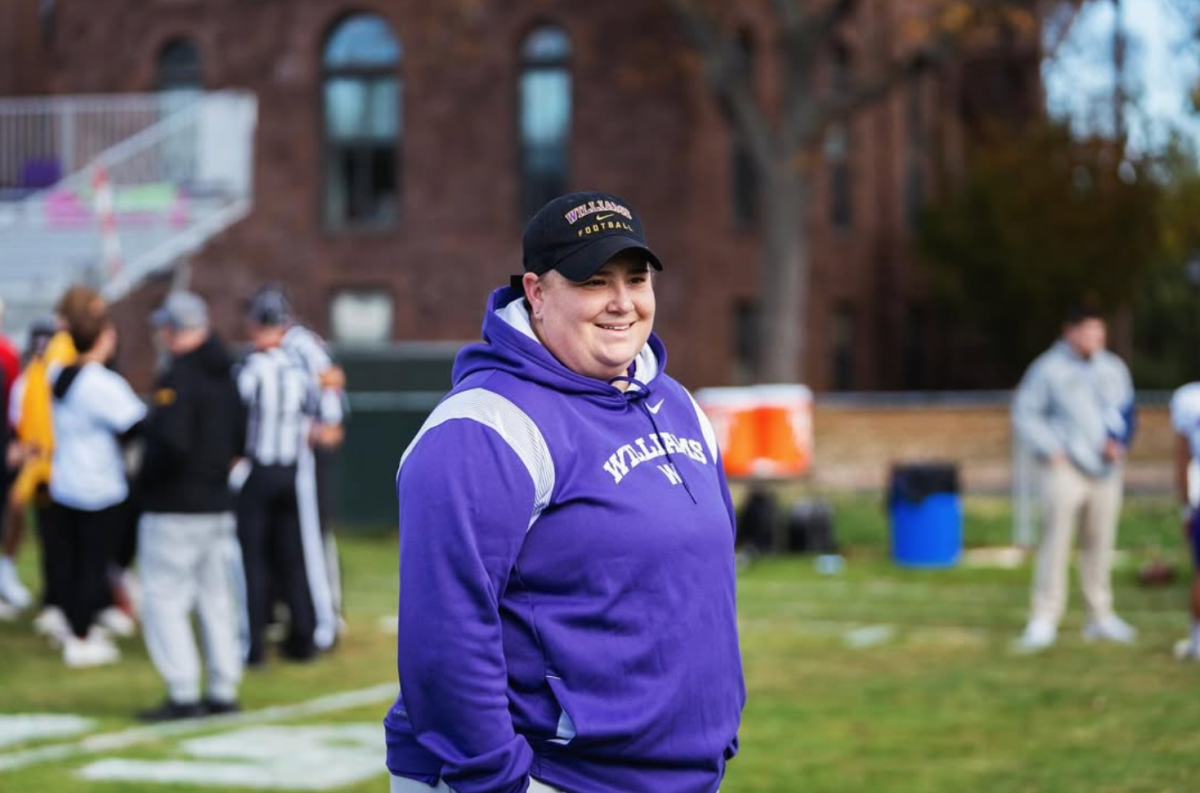
Vitchers noted that her own experience as a student-athlete at the College motivated her to address problems within collegiate athletic culture. “During my time at Williams, I really felt like [the swim] team was my second home,” she said. “But to be very candid, the class of men who I swam with were a little toxic at times and often engaged in misogynistic and sexist behavior towards members of the women’s team.”
During Vitchers’ time on the swim team, the College provided its own alcohol awareness training for student-athletes, although the NCAA didn’t require it. Vitchers said that among her and her teammates, the programs were not always well-received. “It made us feel really singled out and like we were the problem,” she said.
Vitchers expressed the importance of college campuses engaging in prevention. “I really would challenge Williams, and I would challenge any institution to really look at how they’re engaging in prevention,” Vitchers said. “I do hope that the College won’t turn its back on survivors … and that it will continue to invest in violence prevention and response that is meaningful and thoughtful.”
The NCAA did not pass a policy on sexual violence prevention until August 2017, according to Elizabeth Rogers, director of the College’s Office of Intimate Violence Prevention & Response (PEACe Office). Today, the PEACe office provides training on consent education for every team both through their own office and NCAA-required Title IX programming. “The athletic training primarily comes out of the PEACe Office, but we are incorporating Title IX more into those conversations,” Rogers said. “We provide individualized training for each team, for them to have dialogue about how to support not only each other as teammates, but also the wider campus community.”
Since Vitchers’ time at the College, the PEACe Office has also started offering workshops for any student organization or department upon request, according to the PEACe Office’s website.
Separately, students interested in bringing an It’s On Us chapter to the College can initiate that connection, according to Vitchers. “If there already is an organization doing prevention work or survivor advocacy on campus, they can come and become part of the It’s on Us network,” she said.
After evaluating the success of its initial programming, in 2022, the nonprofit found that its message was not effectively engaging young men on campuses. This insight led to the hiring of Kyle Richard to direct the organization’s men’s engagement division. “We haven’t necessarily been speaking to these populations of men in a way that’s relatable, in a way that’s engaging to them,” Richard said.
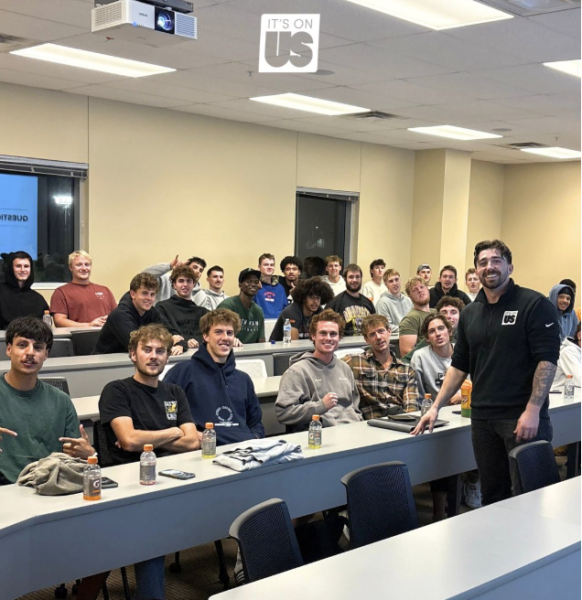
In 2024, with Richard on board, It’s On Us launched The Playbook, a prevention program designed to educate male student-athletes on sexual assault prevention. “The Playbook is really designed with the intent to help athletes see themselves as part of a solution to sexual violence by giving them the knowledge and skills that they need to understand consent and healthy sexual communication,” Vitchers said. “This makes sure that the student-athletes leave the sessions feeling empowered, instead of blamed, shamed, and named as part of the problem.”
In January 2026, It’s On Us launched The Playbook 2.0, highlighting bystander intervention, sexual communication, and consent for men’s and women’s teams. For Vitchers, including content for women’s teams was key. “We kept hearing from schools … ‘Do you have something for the women too?’” Vitchers said. “Creating preventive programming that acknowledges that experience for women is really important for us and [so is] making sure that we’re not just putting the men’s and women’s teams through the same program.”
As It’s On Us continues making strides across campuses, Richard emphasized the potential for student-athletes to feel empowered to enact positive change by being active bystanders. “They should always feel powerful, and they should use that power for good,” he said.