Most students in the Purple Valley are unaware of the “Art Mafia” among us: They don’t wear pinstripe suits or smoke wooden pipes, but the graduate art students’ network is extensive and powerful. The Williams Graduate Program in the History of Art, usually referred to as “Grad Art,” is a two-year master’s program offered in collaboration with the Clark Art Institute.
The students in the program have the opportunity to intern at one of several organizations in the Berkshires, including the Clark, MASS MoCA, the Williams College Museum of Art, and the Office of Historic Preservation of the Stockbridge-Munsee Band of Mohican Indians. Similar to the “Match Day” process for medical students applying to residency, Grad Art students are able to rank their preferred internships while simultaneously being ranked by each program.
Despite the program’s low profile among most undergrads, Grad Art has garnered fame in the art history world, and alums of the College’s art history programs join the famed “Williams Art Mafia.” “Many, many people in the museum world and art history world have gone through some iteration of this program,” said Hannah Chew Grad Art ’26.
Many current students of the program were encouraged to apply by alums, explained Charlie Qing Xu Kong Grad Art ’26. “In undergrad, my advisor, she went to the program for her master’s [degree], and the director of our university art gallery was also a graduate of the program,” he said. “So I had heard quite a lot already from these people [who are] very close to me.”
In addition to their internships, Grad Art students take several courses each semester. Chew’s class list includes “Gérôme,” taught by Director of the Graduate Program in Art History Marc Gotlieb, “Intermediate Studies in French Language and Francophone Cultures,” and an independent study exploring phenomenological art history with Michel Ann Holly, the former director of Grad Art.
“This program doesn’t specialize in any specific thing,” Chew said. “We all, per year, have kind of different, scattered interests, but [the Grad Art program] does a really good job of giving you a generalist art training [and] history training.”
In addition to their courseload, a significant portion of the graduate students’ time goes to their internships. Most students end up with their first or second internship choice, according to Kong. During his first year in the program, Kong served as the publications intern for the Clark. Most internships require only one year, though some students choose to continue with the same program for their entire time at Grad Art.
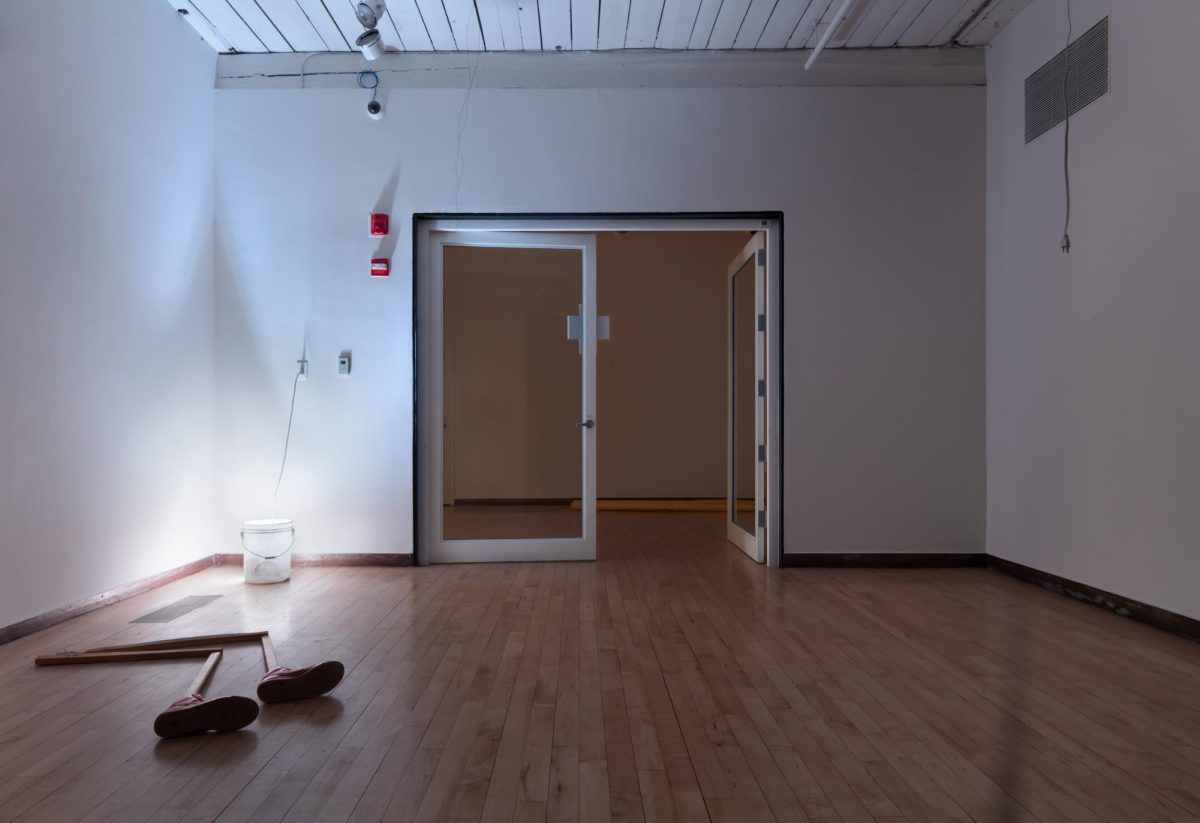
The only program requiring a full two years is the curatorial internship at MASS MoCA, which concludes with a student-curated exhibition. Riley Yuan Grad Art ’25, last year’s intern, curated Dirty and Disorderly: Contemporary Artists on Disgust, which is on view at MASS MoCA through Jan. 4, 2026.
Kong is currently the recipient of the Lenett Fellowship, which funds his intership at the Williamstown + Atlanta Art Conservation Center, located on the Clark’s expansive campus. His internship consists of a year-long conservation project on a piece of American art. This program is only available for second-year students, after they have completed “Art and Conservation: An Inquiry into History, Methods, and Materials,” he explained. “It’s about maintaining the object for our future generations,” Kong said.
Conservation practice is an important part of curatorial work, Kong explained. “There’s a quite magical quality to working with a work of art over a long period of time, because you really do notice every detail, every aspect of its material and art historical life,” he said. “During its initial conception, its manufacture, and then its afterlives as it has been used over the generations. You see the marks of wear … over years of use.”
Second-year students like Chew who intern at the Clark get their own closed-door offices, she said. Chew plans to use her space to organize her capstone project: an exhibition in the Thaw Gallery for Works on Paper opening on July 4, 2026, for the semiquincentennial of the United States. Chew’s exhibition will feature 19th and 20th century American works on paper. Last year, the gallery featured an exhibition curated by William Satloff Grad Art ’25, titled Pastoral on Paper, as part of his tenure working in the Manton Study Center for Works on Paper.
Chew credits the program’s immersive structure with the “slowness” that allows her to focus. “There’s very few distractions,” she said. “You’re here with such a beautiful, well-stocked library [and] people who are also very interested in what you do.”
Grad Art offers a unique opportunity to study and live with a set of passionate, hardworking peers, Kong said. The best parts of the program are, according to him: “The resources and the community and the intense intellectual rigor.”